|

July 2013

Citizen Scientists Created a Record:
In MMPC’s April Monthly News report we encouraged our supporters to become “Citizen Stewards” of More Mesa by reporting any inappropriate activities observed on More Mesa. This month we would like to reprise a similar theme … that of the “Citizen Scientist”. For more than thirteen years, MMPC has played an active role in the collection of important scientific data about More Mesa. We have done this by archiving reported observations of rare birds, plants and animals. Much of this anecdotal, but extremely valuable information, was collated and documented in our More Mesa Handbook, hosted on this site.

Citizen Scientists Still At Work:
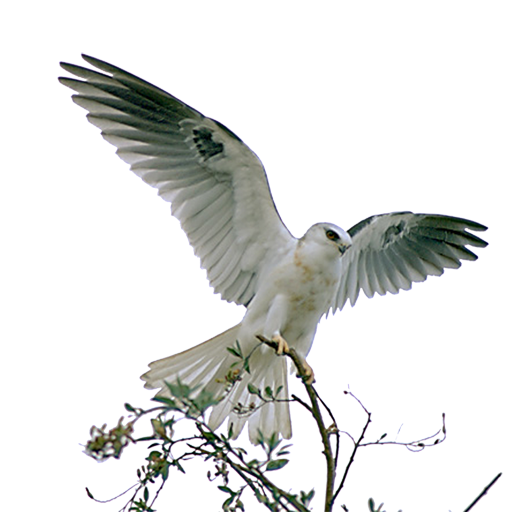
More Mesa provides excellent habitat for probably the most important White-tailed Kite population on the South Coast. Two or three pairs of this beautiful raptor, the signature bird of MMPC, and a fully protected species in the state of California, routinely make More Mesa their home.

And, this year, true to form, there has been a report of a chick located in the area of the historical kite nest on west More Mesa. This sighting, with two others recently reported, document the fact that we have at least two pairs of kites in residence on More Mesa this year; with at least one of these a nesting pair. Another recent submittal by a Citizen Scientist was a fox sighting, also on west More Mesa.

Thanks for all of your good work:
Once again … we call on all Citizen Scientists to keep an eye out for evidence of kite nesting, chicks or fledglings on east More Mesa as well other areas of More Mesa. Perhaps you can also spot the fox, and even the bobcat pair that have often raised a family on the west side of More Mesa.
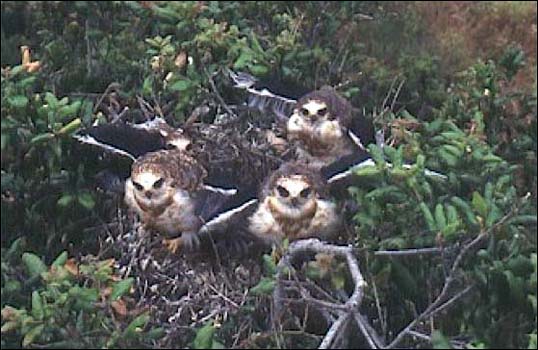
baby kites
Archived photo of baby kites on More Mesa, by Morgan Ball
Similar Posts

  • March 2011

    Although March is “coming in like a lion”, there are already many signs of spring out on More Mesa.  Grasses are green (and high), wildflowers are starting to make appearances and our special raptors are courting and nest building.  The east kite pair is especially busy. Kite watchers may be interested in a story from…

  • June 2012

    Babies, Babies, Babies East: In spite of the very high, and continuous, winds we have been experiencing over the past weeks and months, More Mesa’s eastern kite pair have already hatched, and fledged, three chicks!  A sightings report, filed through our web site, has confirmed that there are, indeed, three juveniles …  already out of…

  • | |

    November 2017

    Big Day for More Mesa – County Approves Coastal Commision Recommendations As reported in our last update, the California Coastal Commission (CCC) was extremely supportive of MMPC’s positions on preservation of More Mesa, and supplemented them with even stronger language than currently existed in the new Eastern Goleta Valley Community Plan. At a meeting on November…

  • |

    March 2012

    Despite the lack of rain, signs of spring are beginning to appear on More Mesa. This Sunday, two butterfly species and two flowering plants were photographed. More Mesa Native Plants – March, 2012 Lacy Phacelia Chaparral Clematis Lacy Phacelia is a native annual, found in the southwestern United States and northern Mexico. The common name…

  • |

    July 2011

    A teaching moment … Although we have not had any documented fledglings at More Mesa, as yet, we have an amazing kite photo to share with you this month.  The image was taken by wildlife photographer Barry Rowan, late in May at Lake Los Carneros.  We thought it would be fun and informative to list…