|

April 2011

Water, water everywhere
The word for this month is WATER!  Here in Santa Barbara, we are currently at 167% of our average rainfall for the “Water Year” 2011.  Indeed 9.62 inches of the 27 inches of rain has fallen in February and March.  What this means for More Mesa is that the vernal pool on the southeast corner has almost reached both the coastal trail, and the north-south trail on the side of More Mesa abutting Hope Ranch.

In addition the emergent wetland that stretches from Hope Ranch toward the middle of More Mesa, has formed a fairly deep “pond” across the main north-south trail.  A wide, marshy expanse surrounds this pond.  In search of ways to circumvent the wetland, several looping paths have been cut by both walkers and emergency vehicles out on More Mesa for various reasons.   In general, the middle of the path, and surrounding areas, are very wet and muddy.

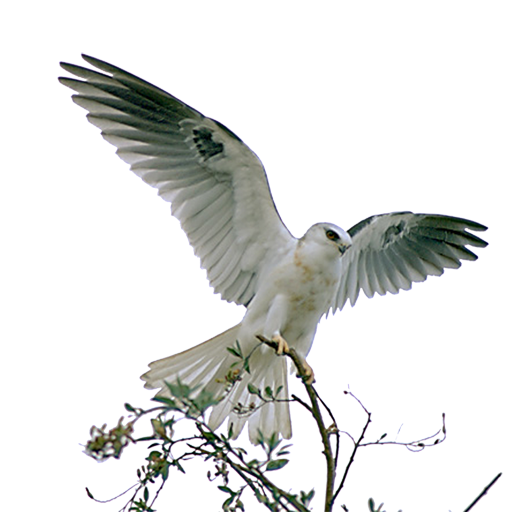
In spite of the water and the mud, a walk on More Mesa is incredibly rewarding this time of year.  Wildflowers are to be found in several places along the trails and the grasses are green and high.  And, there is evidence that kites are already nesting!
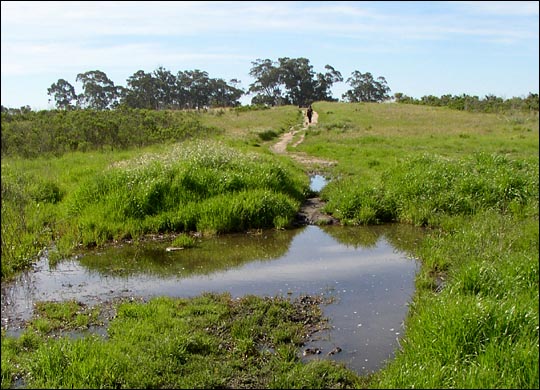
pond on trail
March 2011: A seasonal pool of water forms here in the rainy season.
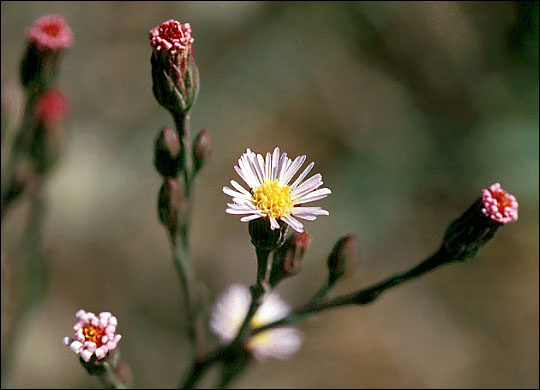
aster

Annual Water-aster, Symphyotrichum subulatum, photographed in the area shown in the photo above in October 2002. This native plant grows in coastal salt marsh, valley grassland and wetland-riparian. It can probably be assumed that the soils in this area remain moist for a period of time after winter rainfall, providing one of the habitats of choice for this aster.
Similar Posts

  • |

    June 2016

    Coastal California Poppy – Eschscholzia californica var. maritima 2016 ​I ​Madonnari street painting festival – Robert Bernstein – click on image for original. This past spring More Mesa provided an amazing wildflower show, especially given the severe drought we are experiencing. And when one thinks of wildflowers, one species in particular often comes to mind.  It is the…

  • May 2011

    Vernal Pools With all the emphasis on water in last month’s news, it seemed most appropriate that our web site should include a section devoted entirely to a very special water feature of More Mesa; its vernal pool.  As described in the More Mesa Handbook, as well as in the Draft Updated Biological Resources Study,…

  • October 2011

    It’s All About The Birds Many different species of birds have been reported on More Mesa in the past few weeks.  In addition to our year-round residents: White Tailed Kites, Red Tailed Hawks, Red Shouldered Hawks and Kestrels, winter visitors are already arriving, as evidenced by the presence of Northern Harrier, Sharp-shinned Hawk and Say’s…

  • |

    March 2012

    Despite the lack of rain, signs of spring are beginning to appear on More Mesa. This Sunday, two butterfly species and two flowering plants were photographed. More Mesa Native Plants – March, 2012 Lacy Phacelia Chaparral Clematis Lacy Phacelia is a native annual, found in the southwestern United States and northern Mexico. The common name…

  • |

    Spring 2017

    Spring 2017 This Month on More Mesa … Spring Flowers: The big rains that finally came, while turning the grasses green, have not produced many wildflowers. The problem could be that the rains came too late in the season. However, careful scrutiny will reveal some Blue-eyed Grass … here and there … and some extremely…

  • February 2011

    It has been several years since the More Mesa Preservation Coalition has reported on the growth of our supporter base, and how important it is to the success of our mission … to preserve More Mesa forever. Therefore, we would like to take this opportunity to reemphasize the significance of building this already large and…