November 2013

It’s Fall …
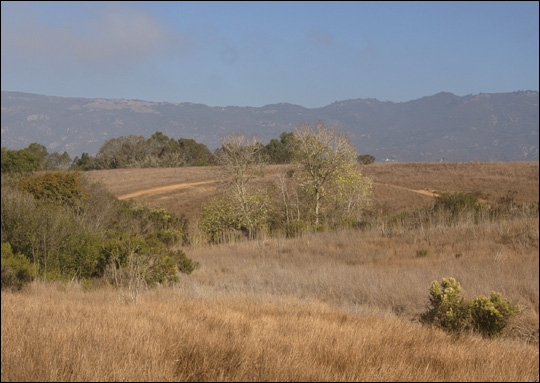
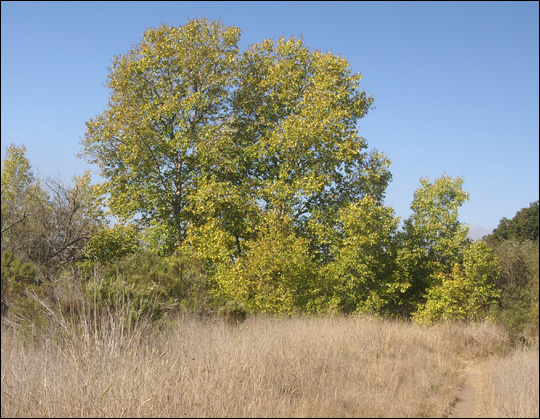
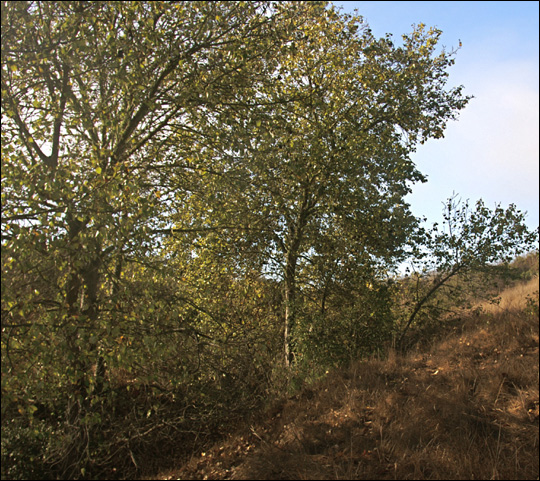
Folks who don’t live in our beautiful Santa Barbara area often make a big issue of the fact that they love the changing seasons, and note that we don’t have them here. We all know we do, but the changes are subtle and you have look more closely to be aware of them. For example, one of the family of our native trees, one much less represented on More Mesa, is the Black Cottonwood. And although they are relatively rare in the Goleta Valley, More Mesa can boast of three separate groves of Black Cottonwoods.

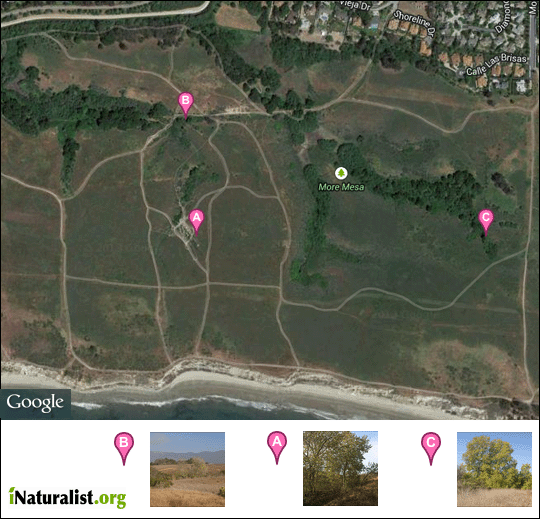
The most visible grove, on the east side, just south of the Cypress trees, has three very tall (65-70 feet), readily observable and spectacular examples of these deciduous trees. And if you look at the area surrounding these giants, you will see that there are also a sizeable number of younger trees, creating a delightful Cottonwood grove. A second grove with smaller, less noticeable trees is in one of the drainages in the middle of More Mesa and the third, very small grove is just west of the railroad cut.

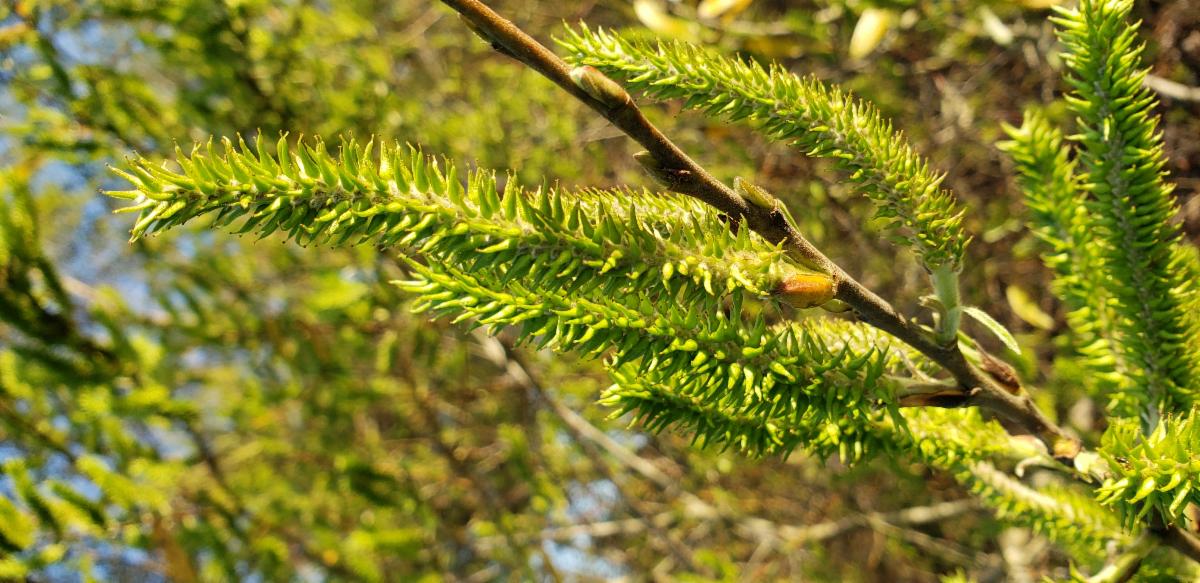
Now, in autumn, the round distinctive leaves of the Cottonwoods are turning yellow and beginning to drop. The trees will be bare throughout winter, with leaves reappearing again in late February or early March … our spring. Moreover, these seasonal changes (phenology) of cottonwoods on More Mesa are now being monitored and reported to Budburst. There are indeed seasons on More Mesa!

On More Mesa, cottonwoods provide habitat for many creatures including Nuttall’s Woodpecker. This woodpecker eats cottonwood buds in the spring. and also nests in self-excavated cavities in cottonwoods, as well as in other native trees on More Mesa.
Cottonwood 3

Cottonwood 2

cottonwood1

map

Similar Posts

  • May 2013

    Monthly Supporter Update The More Mesa Preservation Coalition (MMPC) is now more than 1100 supporters strong. However, we realize that, in this busy era, most people do not have the time to check our monthly news on the web site. And, because there is not an urgent threat apparent on the horizon, More Mesa is…

  • October 2013

    Nature’s Symphony In the past we have talked about the magic of More Mesa – its plants, animals and habitats, experienced through their sounds, sights and scents. While individual sounds – bird calls, seal sounds, coyote calls, etc are often heard, they are all small parts of the overall “soundscape” of More Mesa.   More Mesa, like…

  • May 2016

    Another Chapter in our “Cautionary Tales” Book:  It seems as though we have been relaying cautionary tales quite frequently. Exactly a year ago, and even more recently, we warned of the unstable nature of More Mesa’s cliffs and the heavy erosion that takes place, not only after rain, but even in dry weather. There is…

  • |

    April 2013

    To Citizen Stewards For more than a decade, our supporters have been active citizen scientists by reporting sightings of rare birds, animals and plants that are observed on More Mesa.  These reports have contributed significantly to our base of scientific knowledge about this last remaining jewel of coastal open space.  Many in our community have…

  • January 2013

    As many of you may already know, More Mesa was sold to a Saudi investor in mid-December.  Obviously MMPC is disappointed that the seller offered the property to the community for $35 million, but subsequently sold to the new owner for $25 million.  However, we look forward to working with the new owner in a…

  • | |

    December 2013

    It was a busy and productive year for More Mesa. As is our custom, below are the highlights for the year 2013. More Mesa Sold More Mesa was sold to a Saudi investor in mid-December of last year.  Obviously MMPC is disappointed that the seller offered the property to the community for $35 million, but…