|

April 2011

Water, water everywhere
The word for this month is WATER!  Here in Santa Barbara, we are currently at 167% of our average rainfall for the “Water Year” 2011.  Indeed 9.62 inches of the 27 inches of rain has fallen in February and March.  What this means for More Mesa is that the vernal pool on the southeast corner has almost reached both the coastal trail, and the north-south trail on the side of More Mesa abutting Hope Ranch.

In addition the emergent wetland that stretches from Hope Ranch toward the middle of More Mesa, has formed a fairly deep “pond” across the main north-south trail.  A wide, marshy expanse surrounds this pond.  In search of ways to circumvent the wetland, several looping paths have been cut by both walkers and emergency vehicles out on More Mesa for various reasons.   In general, the middle of the path, and surrounding areas, are very wet and muddy.

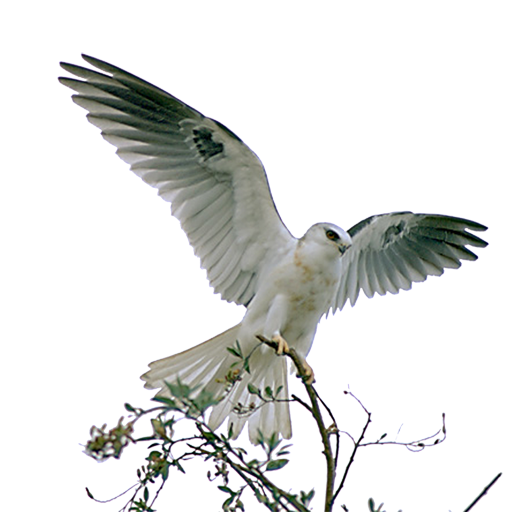
In spite of the water and the mud, a walk on More Mesa is incredibly rewarding this time of year.  Wildflowers are to be found in several places along the trails and the grasses are green and high.  And, there is evidence that kites are already nesting!
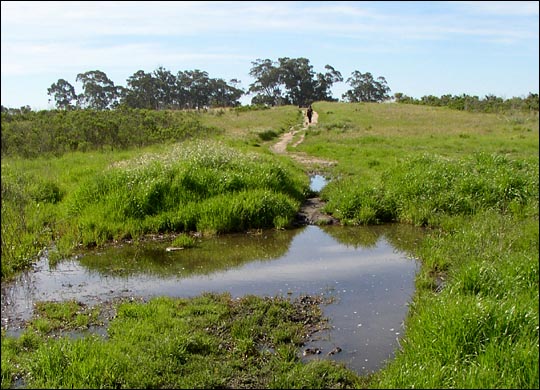
pond on trail
March 2011: A seasonal pool of water forms here in the rainy season.
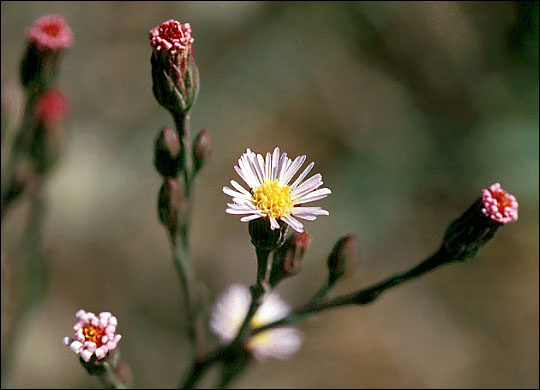
aster

Annual Water-aster, Symphyotrichum subulatum, photographed in the area shown in the photo above in October 2002. This native plant grows in coastal salt marsh, valley grassland and wetland-riparian. It can probably be assumed that the soils in this area remain moist for a period of time after winter rainfall, providing one of the habitats of choice for this aster.
Similar Posts

  • |

    July 2011

    A teaching moment … Although we have not had any documented fledglings at More Mesa, as yet, we have an amazing kite photo to share with you this month.  The image was taken by wildlife photographer Barry Rowan, late in May at Lake Los Carneros.  We thought it would be fun and informative to list…

  • Came the Rains!

    More Mesa’s Vernal Pool … Full at Last The southeast corner of More Mesa boasts one of the rarest, and most threatened, of natural communities: a vernal pool.  Vernal pools form as a result of distinctive climate, soil and topography, and are distinguished by the organisms they host. Many of these organisms are restricted to…

  • |

    March 2012

    Despite the lack of rain, signs of spring are beginning to appear on More Mesa. This Sunday, two butterfly species and two flowering plants were photographed. More Mesa Native Plants – March, 2012 Lacy Phacelia Chaparral Clematis Lacy Phacelia is a native annual, found in the southwestern United States and northern Mexico. The common name…

  • |

    Spring 2017

    Spring 2017 This Month on More Mesa … Spring Flowers: The big rains that finally came, while turning the grasses green, have not produced many wildflowers. The problem could be that the rains came too late in the season. However, careful scrutiny will reveal some Blue-eyed Grass … here and there … and some extremely…

  • February 2015

    Last month we reported on the beautiful greenery and grasses of More Mesa. This month we are pleased to present the next installment of emerging spring … flowers. A great many species are contributing to the show. And among all the introduced species (mustard, radish, Bermuda Buttercups, etc) there are some truly delightful natives popping…