March 2012
Despite the lack of rain, signs of spring are beginning to appear on More Mesa. This Sunday, two butterfly species and two flowering plants were photographed.
| More Mesa Native Plants – March, 2012 | |
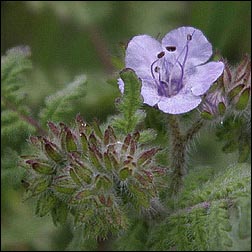
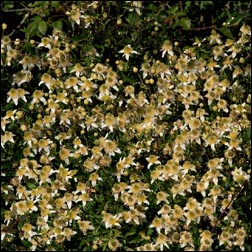
| Lacy Phacelia | Chaparral Clematis |
 |
 |
|
Lacy Phacelia is a native annual, found in the southwestern United States and northern Mexico. The common name is inspired by the lacy leaves, that consist of many deeply lobed leaflets. It is grows in a wide variety of habitat types, and tolerates dry conditions well. The nectar-rich flowers, opening sequentially along the coiled heads, provide a long flowering time for the many pollinators the flower attracts. Included in this group are honeybees, and hoverflies; the latter valuable because they eat aphids and other pests. |
Chapparal (or Pipestem) Clematis is a deciduous vine, growing to 20 feet over other plants on slopes, chaparral, and woodland. It is found along the coast from San Francisco to Baja California, and inland to the western foothills of the Sierra Nevada at elevations less than 2000 meters. It prefers its roots to be in shady areas, and flowers in sunshine. It should not be confused with the other California native clematis, Creek Clematis, which as its names suggests, grows along the sides of creeks and in other moist areas. |
| More Mesa Native Butterflies – March, 2012 | |
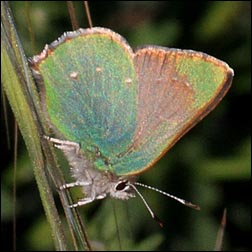
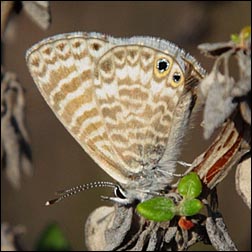
| Bramble Green Hairstreak | Marine Blue |
 |
 |
|
The Bramble (or Coastal) Green Hairstreak is found along coastal California, rarely inland. The range is small and thus population sites should be protected. On More Mesa, it has been seen perched on Deer Weed, which grows in great number in the sandy soils of the southwestern corner of More Mesa. Adults fly in spring from March to May/June. Caterpillar host plants include Deer Weed and Buckwheats. Cliff Buckwheat grows in the same area in abundance. Another butterfly, Acmon Blue, also uses these hosts, and is also found in this area. |
Marine (or Striped) Blue butterflies are found in the southwest deserts, and on the south and central coast of California. In the north, they fly from April to September, and in the south for most of the year. Flowers and seedpods of host plants are eaten by caterpillars, after eggs have been laid singly on flower buds. Host plants include many legumes, of which Deer Weed and non-native Vetch (Vicia) species can be found on More Mesa. An imported plant, Plumbago, is a frequent host. It is a globally secure species, with few sparse populations in its range. |