
July 2015

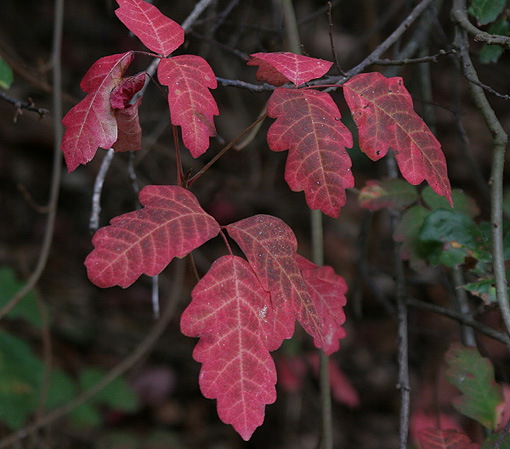
An irritating reminder … Yet another manifestation of the drought concerns poison oak; harbinger of itchy rashes. If you have been out on More Mesa you may have noticed that our abundant poison oak populations have come up in profusion this year, and in spite of little water. And you may also be aware that poison oak being deciduous, its leaves normally turn red and die in the fall. However in this fourth year of the drought, the leaves began to turn red in mid June and are already dropping. Because poison oak branches and stems are as dangerous as the leaves, but harder to notice without their famous “Leaves of three, let them be” reminder, all who visit More Mesa need to exercise special caution much earlier in the season … like now!

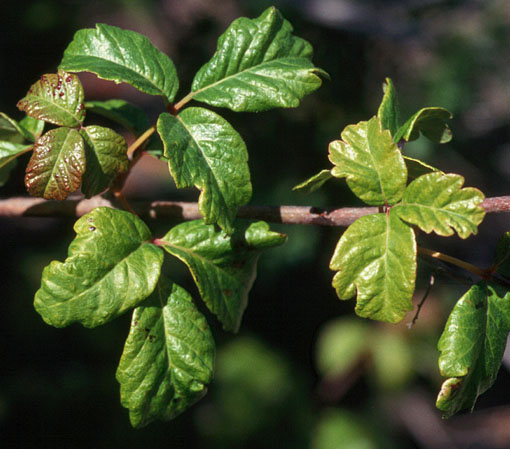
Poison oak can grow in several forms; in open sunlight as a dense shrub, or in shaded areas as a ground or climbing vine. The three leaflets have scalloped edges, resembling (slightly) the leaves of a true oak and can be bronze, bright green, yellow-green or reddish depending on the season. If you have inadvertently wandered into poison oak:

  • Remove your clothes as soon as possible
  • Wipe the suspect area with alcohol
  • Wash all exposed areas with cool running water. Use soap and water if possible … be sure to clean under fingernails
  • Wash clothing and all objects that came into contact with the plants
  • Bathe pets exposed to the plants.
2015Jul_03
Climbing Poison Oak in Spring
2015Jul_02
More Mesa Poison Oak in June
2015Jul_04
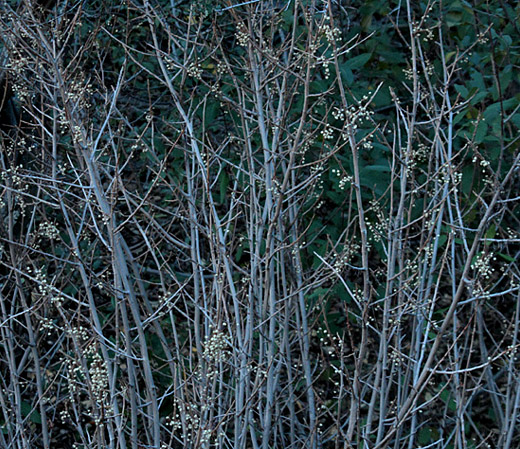
Poison Oak stems and fruit after the leaves have fallen
2015Jul_05
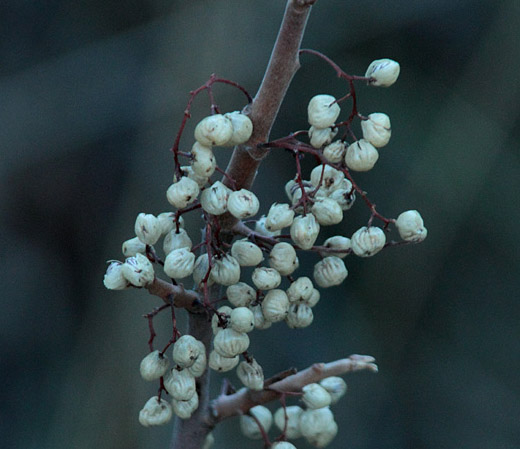
Poison Oak fruit

Similar Posts

  • January 2015

    And some rain came … Santa Barbara joyously welcomed the 6.3 inches of rain we received in December. Unhappily these rains represent only 20% of the yearly average rainfall in Santa Barbara and a very small percentage of the amount needed to end our three-year long drought. That being said, the growing things on More…

  • November 2011

    Plant List An online plant list for More Mesa has now been compiled and loaded onto the web site. The entries on the list are derived from the 1982 and 2010 Biological Resources Studies, a list from the Santa Barbara Botanic Gardens, and a few other observations. Please click here for the list. Native Plants Blooming…

  • September 2015

    Independent gets it wrong, but MMPC gets it right! While the announcement of potential development was no surprise to any of us at the More Mesa Preservation Coalition, a recent article in the Independent (30 July 2015) , in response to a More Mesa Press release (here and here),  got it wrong. We have been tracking the…

  • |

    April 2015

    On the bright side … Although the drought has increasingly occupied our awareness over the past three years, there are a few bright lights to mention on More Mesa this month. In a previous issue this year we talked about various wildflowers that have been seen … not in great abundance, but they are around,…

  • |

    Living with the Lockdown Treasure Hunt #2

    Welcome to the second of our treasure hunts. The plant we bring you now, Miner’s Lettuce (Claytonia perfoliata), can be found in shady places on More Mesa, along creeks and in parks everywhere around Santa Barbara. Remember to keep your 6 foot distance and have fun!! The Surprising Truth About Miner’s Lettuce Miner’s Lettuce got its…

  • October 2015

    White-tailed Kites Have the Last Word! In the March News of this website we reported that there was evidence of potential nesting for the White-tailed Kite. This was welcome news as our famous signature raptor, a bird that historically lives and breeds in profusion on More Mesa had not produced a single chick for at least three years….