Living with the Lockdown Treasure Hunt #2
Welcome to the second of our treasure hunts. The plant we bring you now, Miner’s Lettuce (Claytonia perfoliata), can be found in shady places on More Mesa, along creeks and in parks everywhere around Santa Barbara. Remember to keep your 6 foot distance and have fun!!
The Surprising Truth About Miner’s Lettuce
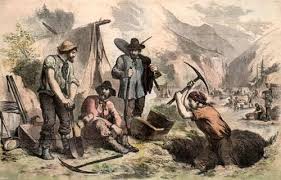
Miner’s Lettuce got its name during the California gold rush when fresh vegetables were hard to come by. Gold seekers learned the value of Miner’s Lettuce from local native people. Indeed, on our Central Coast, this plant was a traditional food of the Chumash … usually served fresh … like a salad. We know now, that a single salad of miner’s lettuce can provide up to a 1/3 of our daily suggested amount of vitamin C, 1/5 of vitamin A, and a 1/10 of iron. While the miners were not privy to all this data, they knew that eating Miner’s Lettuce would prevent several diseases, but especially scurvy! For them, it was a smart thing to have for dinner.

What is It?
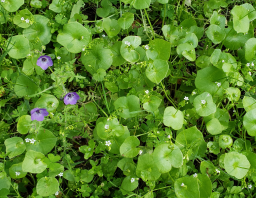
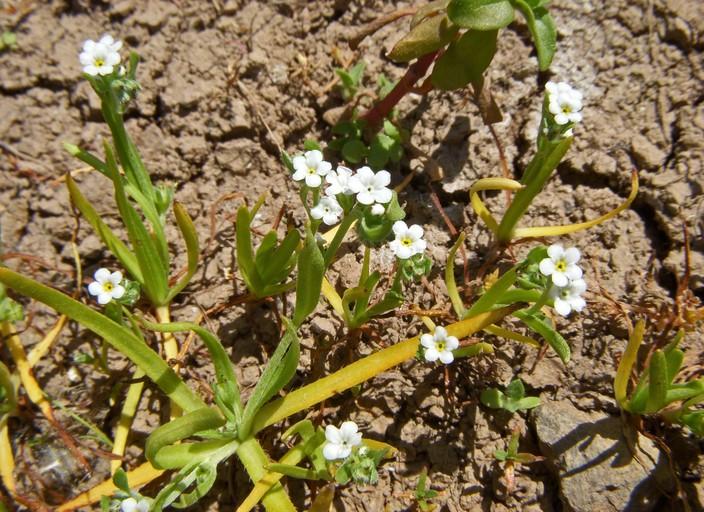
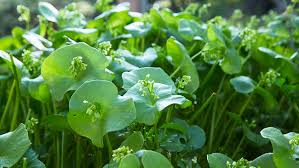
Miner’s Lettuce is a small, herb-like, slightly succulent, light green annual plant. It has round, disk-like leaves, which surround its smooth, tender stem; a single stem which passes directly through the round leaf and makes identification easy. The bloom consists of small, whitish or pink blossoms (see photo). During the bloom, there can be a single flower in the exact center of the leaf, or a stem consisting of several flowers above the leaf. This year’s blossoms seem to have many flowers along the stem … perhaps the abundant recent rainfall?
Where do you find it?
We are particularly blessed here in California since, this small plant is native to the West Coast of the U.S. and Canada. Indeed, old world explorers of North America were so taken with the flavor of Miner’s Lettuce that, at the end of the 18th century, they brought seeds back to Europe and planted them in Kew Gardens, London. Miner’s Lettuce is most often found in the wild, more than it is cultivated, and grows prolifically in shady areas in coastal sage, fields, gardens, woodlands, and forests. Cool temperatures and moist growing conditions encourage a lush, juicy growth.
Uses
All the parts of Miner’s Lettuce; the leaves, the flowers and the stems may be eaten … either raw (in a salad) or cooked. Gourmet chefs are prone to wax eloquent about Miner’s Lettuce salads describing them as “one of the best wild greens you’ll ever taste”, “mild and sweet with juicy leaves”, and “tasting quite a bit like spinach with a nice refreshing crunch to it”. But most importantly, and for a very reliable and unbiased assessment, I consulted some backpacking friends. They report they are always greatly appreciative of having fresh greens available, and describe Miner’s Lettuce as tasting a little like spinach with a “neutral” flavor. I had some for breakfast this morning and pretty much agree with their assessment.