June 2011

Russian Knapweed: Three Times a Charm?
Invasive weeds are extremely difficult problems in open spaces.  Getting rid of these interlopers, as soon as possible, is essential to preventing their spread. Since 2009, we have been reporting on efforts of County Parks (with some help from MMPC) to eradicate an area of Russian Knapweed on More Mesa. Russian Knapweed, is a noxious weed; one that is toxic to horses, spreads easily and rapidly, and is generally difficult to eradicate.

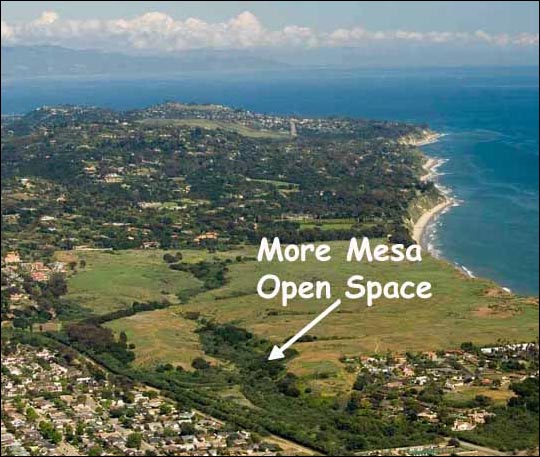
At the time of the first phase of the eradication process, in Fall 2009, there was about ¼ acre of this weed on County owned sections of the northwest part of More Mesa.  The first treatment seemed to have reduced the area and density of Knapweed, so a second treatment phase was undertaken in Late Spring 2010. Last month, a recheck of the area showed that there was not very much knapweed compared to previous years.  On the basis of this data, the third (and hopefully final) phase was carried out.

The More Mesa Preservation Coalition is proud to be a part of this important work on County owned environmentally sensitive land, as well as preventing the spread of Russian Knapweed over all of More Mesa.
open space

Similar Posts

  • March 2013

    Knapweed … Going, Going, Gone Three times in past years, October 2009, June 2010 and June 2011 we have reported on MMPC’s participation in eradication of the noxious, invasive weed, Russian knapweed.  It appears to be GONE! In a report from the Agricultural Commissioner, David Chang, we are informed that he inspected the Flood Control Restoration Site on More Mesa,…

  • October 2011

    It’s All About The Birds Many different species of birds have been reported on More Mesa in the past few weeks.  In addition to our year-round residents: White Tailed Kites, Red Tailed Hawks, Red Shouldered Hawks and Kestrels, winter visitors are already arriving, as evidenced by the presence of Northern Harrier, Sharp-shinned Hawk and Say’s…

  • February 2011

    It has been several years since the More Mesa Preservation Coalition has reported on the growth of our supporter base, and how important it is to the success of our mission … to preserve More Mesa forever. Therefore, we would like to take this opportunity to reemphasize the significance of building this already large and…

  • March 2011

    Although March is “coming in like a lion”, there are already many signs of spring out on More Mesa.  Grasses are green (and high), wildflowers are starting to make appearances and our special raptors are courting and nest building.  The east kite pair is especially busy. Kite watchers may be interested in a story from…

  • November 2011

    Plant List An online plant list for More Mesa has now been compiled and loaded onto the web site. The entries on the list are derived from the 1982 and 2010 Biological Resources Studies, a list from the Santa Barbara Botanic Gardens, and a few other observations. Please click here for the list. Native Plants Blooming…

  • May 2011

    Vernal Pools With all the emphasis on water in last month’s news, it seemed most appropriate that our web site should include a section devoted entirely to a very special water feature of More Mesa; its vernal pool.  As described in the More Mesa Handbook, as well as in the Draft Updated Biological Resources Study,…