Finally Spring! April-May 2018
A Spring Walk on More Mesa
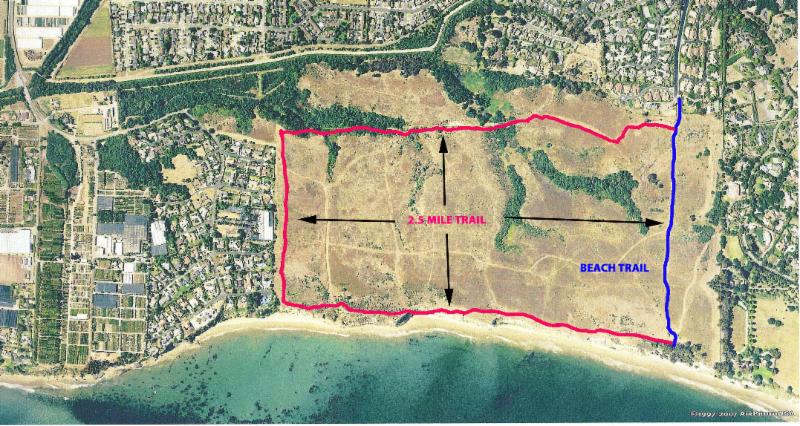
If you are wondering why it has been so long between updates, it’s because we’ve been waiting patiently for spring. It finally happened a couple of weeks ago and the treasures that we usually see on More Mesa in February and March are here now … at least most of them are. The reasons for this extremely late spring are many and varied. Principally, it was colder, drier and it rained at the “wrong” time. Specifically, 8% colder, only 50% of normal rainfall and, unhappily, most of that rainfall occurred in March, rather than earlier in the year. Now that the scientist in me has been satisfied as to the reason for this really late spring, I decided to celebrate by taking a walk of the kind we talked about in our last post. Most of the signs of spring described were found on the main eastern north-south trail … marked in blue on the map below.
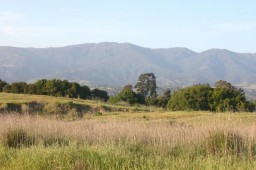
Starting at the gate off Mockingbird Lane, I ambled toward the coast noting fairly high grasses that were not quite the bright green of wetter years. Most of these grasses are introduced non-natives like Harding Grass… brought to More Mesa for grazing cattle in the first half of the 20th century. We do also have many native grasses like Purple Needle Grass, but those are more difficult to find.
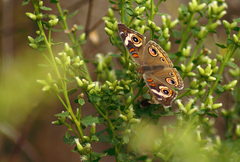
There were several Buckeyes flitting near the ground. The caterpillars of these small but beautiful brownish butterflies … with large eye-spots … feed on the ubiquitous plantain found on the eastern north-south trail to the coast.
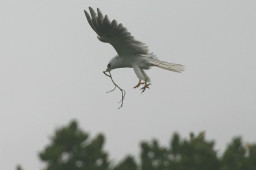
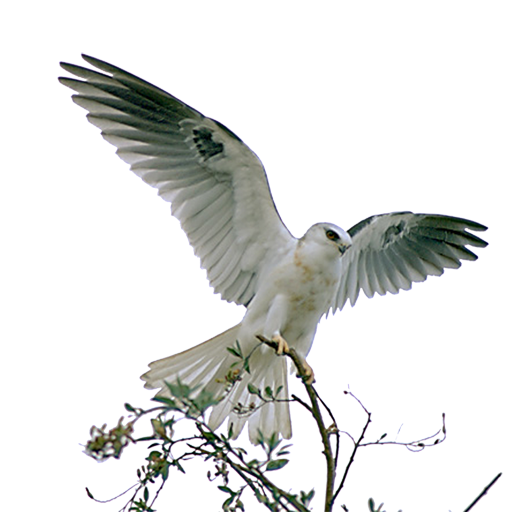
White tailed kites can also be easily observed in their
historical perching and nesting sites from this path as well. Recent reports of nest building are welcome news, as the drought had drastically reduced the number of kites in the entire Goleta Valley until last year.
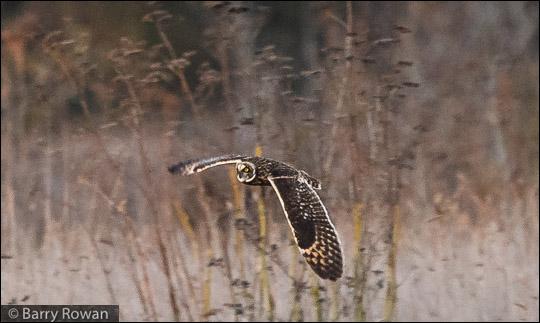
As expected, our avian winter visitors (Northern Harriers, Short-eared Owls and Burrowing Owls) have departed for their mating and nesting habitats. There were, however some beautiful Common Egrets hunting in the wetter areas of our grasslands.
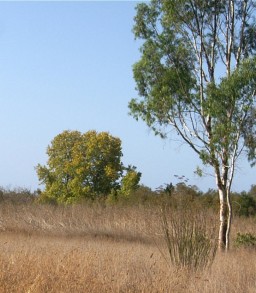
Further south, the largest of our three Black Cottonwood groves, with two 70-90 foot trees and many, many smaller trees, is showing lovely new growth. Unfortunately since sufficient rains did not materialize, our only vernal pool, at the southeastern corner of More Mesa is virtually indistinguishable from its surroundings. We hope for a wetter year next year.
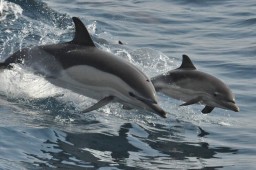
A stop at the top of the stairway to the beach was a respite and provided some wonderful views of sea birds including pelicans and gulls. Not this time, but there have been times, when I have seen gray whales and dolphins from this same vantage. As the day was quite clear, the four Channel Islands off our coast were plainly visible.
I headed west to look at the coastal habitat in full bloom at, and over, the edge of the cliffs. Prominent was the California Bush Sunflower blooming in profusion over large portions of the cliff. Limited groupings of Lupine, Fiddle-neck, Blue-eyed Grass, Deerweed and a few Poppies can be found in various spots around More Mesa, especially in the sandier soils of the west end. However, except for these, it has not been a year for a wealth of wildflowers. This was probably due to the lateness of rains and the inability of the wildflowers to compete successfully with the grasses. A similar effect happened last year but was not as pronounced as this year.
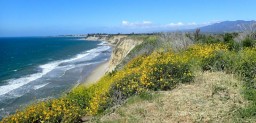
I returned home … invigorated, and once again, feeling truly blessed that More Mesa is in all our lives.
Thanks so much for caring about this most special of places!
Valerie Olson
President, MMPC