October 2016

Earthquake on More Mesa?

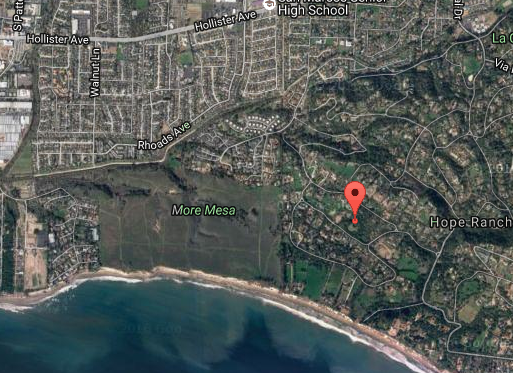
On the very first day of last month, at 8:42 in the morning, a magnitude 2.7, earthquake was reported for the More Mesa area. This event was incorrectly labeled in the press as the “Goleta Earthquake”. However in fact, the longitude and latitude of the quake epicenter placed it near a residence in Hope Ranch, about 1/3 mile due east of the edge of More Mesa (See aerial photo below.)

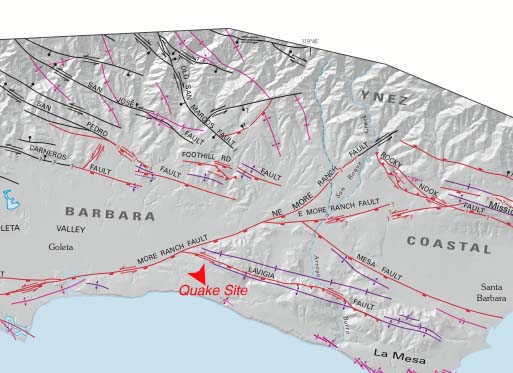
This low magnitude quake was not an unusual occurrence because our area, like most of California, is riddled with earthquake faults … and tremors are very frequent. For example, there have been 97 events of magnitude 1.5 or greater in Santa Barbara during the last year. The geologic map below shows various faults in the immediate area of More Mesa, with either black or red lines depending on the geologic deposits involved. Prominent among all the small faults shown, and at the north-eastern section of More Mesa, is the intersection of two larger faults, the More Ranch Fault and the Lavigia Fault.

To learn more about the geology of More Mesa, go to our 2014 Symposium videos and click on any of the titles. All Symposium videos will then appear on Vimeo. Geology is discussed in the talk titled “Ecology of More Mesa.”

We are indebted to the U.S. Geological Survey for providing the new and updated map geologic map of the Santa Barbara area, a map formulated with a major contribution from our own Dr. Edward Keller of UCSB.
earthquake-epicenter
2016-quake-site

Similar Posts

  • |

    Welcome!

    The More Mesa Preservation Coalition (MMPC) is a group of concerned citizens committed to preserving More Mesa in perpetuity. Members include professionals, neighbors, conservationists, activists, scientists, planning specialists, students, hikers, equestrians, cyclists and beach goers. More than 1000 people have already signed on to be made aware of what is happening to More Mesa and…

  • November 2016

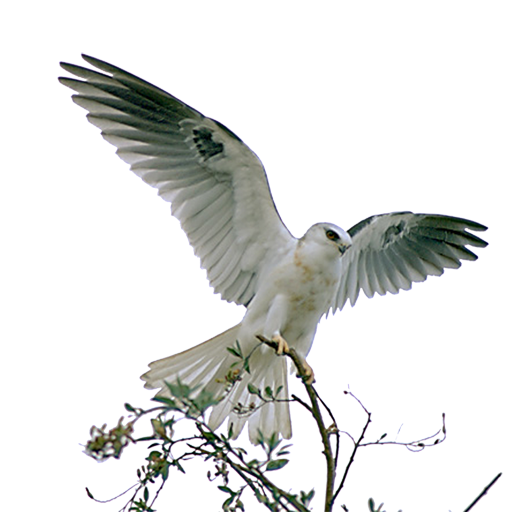
    White-tailed Kites! Although sightings of White-tailed Kites have been rare in this fifth year of the drought, we are happy to report that a pair of these special birds have been seen, very recently, on the eastern side of More Mesa, and on the western portion as well. While these two sightings may be of…

  • February 2016

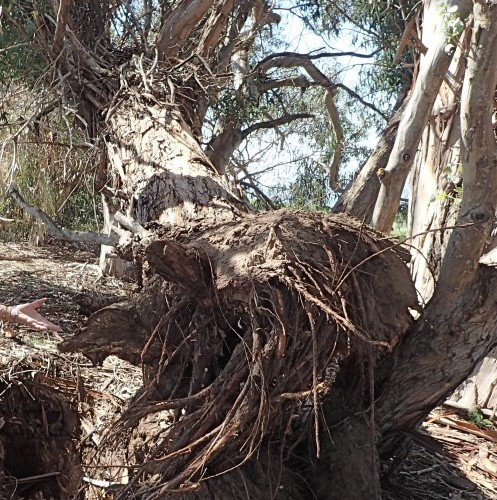
    Caves Are No More In several previous issues we discussed the dangerous erosion of the cliffs of the various sections of More Mesa. In October of 2014,  an incident where someone was hurt while in a cave on the western side of More Mesa precipitated a discussion of the geology of More Mesa’s cliffs. Specifically, we noted…

  • March 2016

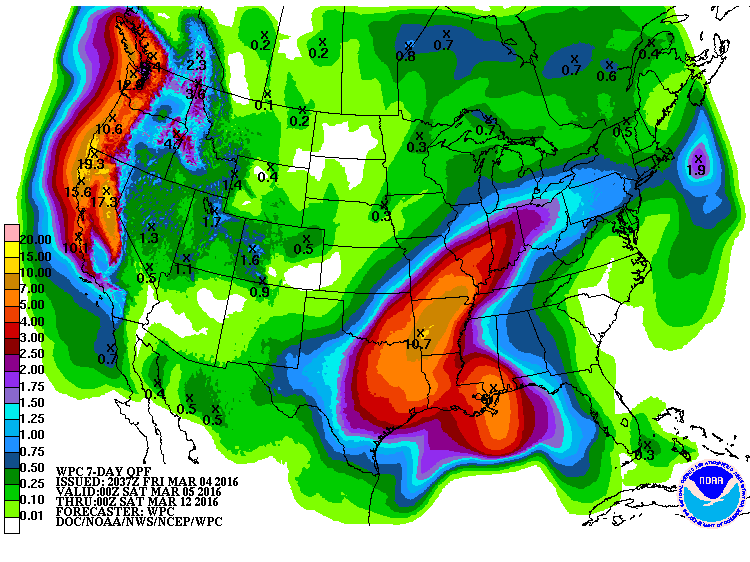
    El Niño Rains Haven’t Forgotten Us … They May Just Be Running Late If you are wondering what happened to the vaunted El Niño,  weather experts have stated that periods of sunny and warm weather are typical even in strong El Niño winters and that there is “No need to be alarmed that El Niño…

  • July 2016

    Why Collect Seeds Anyway? Last month we discussed the Coastal California Poppy and how the Cheadle Center for Biodiversity and Ecological Restoration (CCBER) collects seeds of this native plant on More Mesa. However, in addition to poppies, More Mesa is a very valuable source in the collection of many other important native plants. These include…

  • |

    June 2016

    Coastal California Poppy – Eschscholzia californica var. maritima 2016 ​I ​Madonnari street painting festival – Robert Bernstein – click on image for original. This past spring More Mesa provided an amazing wildflower show, especially given the severe drought we are experiencing. And when one thinks of wildflowers, one species in particular often comes to mind.  It is the…