It’s All About the Birds and the Bees!
Mother Nature Has Incredible Ability to Bounce Back!
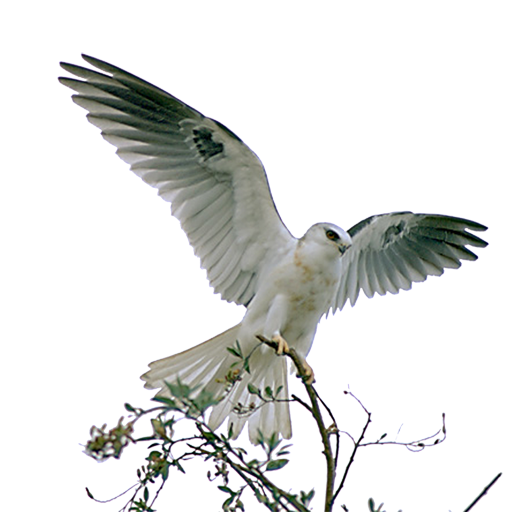
In our Spring Issue we waxed eloquent over the rains that had filled our prolific and very significant vernal pool. And further, those same rains also created an unusually effective ecological chain of events. The rains brought grasses … grasses in great profusion. These grasses then provided an abundance of food for the rodents that are prey for our local birds … the most important of which is our “signature and logo” the White-tailed Kite.
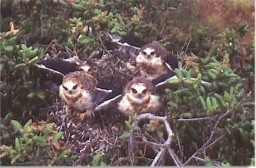
Photo Courtesy of Morgan Ball
Here’s how the rains inspired the kites. In normal rain years (October 1st of the current year to September 30th of the following year) More Mesa supports two, and sometimes three pairs of adult kites. The nests are conveniently referred to as “East”, “Central” and “West”. Each breeding pair typically has 2-4 chicks per nest, but not all the chicks may survive. “Doing the math” tells us we could have between eight and eighteen kites on and around More Mesa at the end of a breeding season. However the number is typically much closer to eight. During the recent drought, we had several years with no More Mesa chicks reported at all. Last year More Mesa had but a single breeding event that produced two chicks … perhaps the only youngsters in all of the Goleta Valley.
BUT THIS YEAR WAS A BANNER YEAR! Of the 10 breeding events in the Goleta Valley, More Mesa had three active nests that fledged at least 10 young and possibly many more. Further, there is some evidence that one or more of the pairs have “double clutched” … that is, they raised yet another set of chicks. In the past we have seen chicks hatched as late as October, so there may even be more to come!
AND EVEN MORE EXCITING … In our extensive web feature about White-tailed Kites, we have described the kite’s practice of winter communal roosts. We have not observed one of these roosts for many, many years. However, this year, a large communal
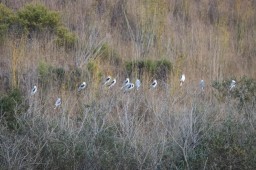
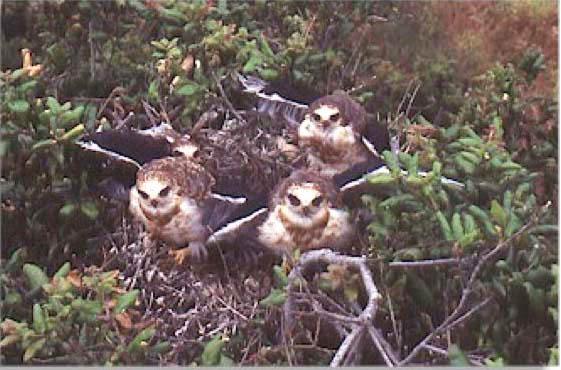
Photo Courtesy of Barry Rowan
roost was discovered in the central area of More Mesa. This particular roost is unusual for a couple of reasons. First, roosts typically are a winter phenomenon that occurs, at the time when all, or most of, the chicks are fledged. But this roost was identified in September. Moreover, at one point there were 29 birds observed at the central roost. This is an extremely large number and would indicate that either there were a great many chicks fledged on More Mesa, or there were visiting kites from other areas around the Goleta Valley … or both! (As of this writing the roost has been abandoned. This is typical behavior, and as yet, an alternate roost has not been identified.)
And What About the Bees?
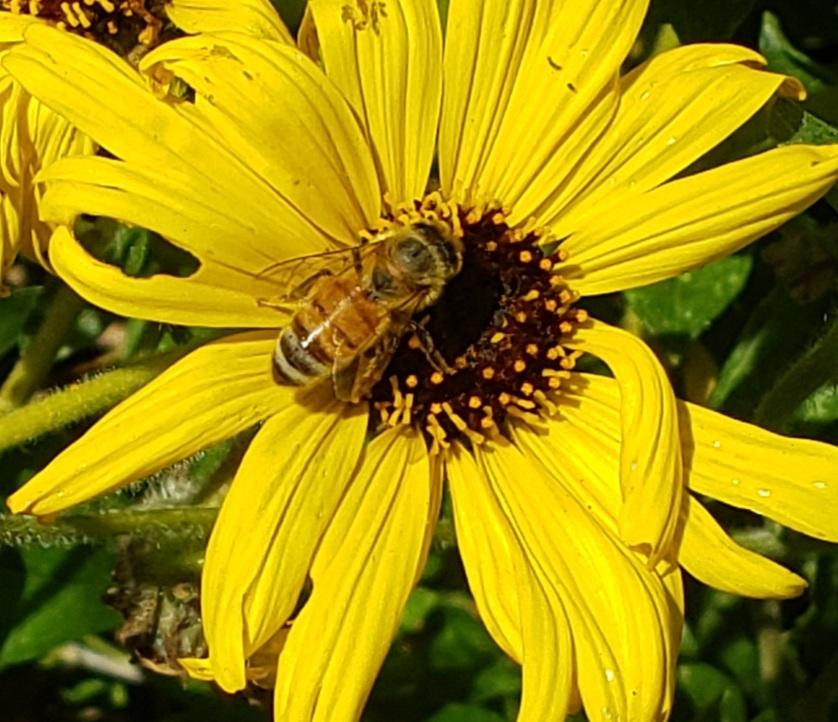
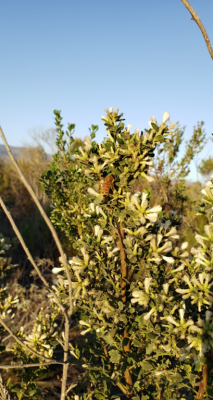 Bees, and their almost 300 species of insect buddies, are, as usual, busy nectaring from coyote bushes in flower during the fall and winter seasons on More Mesa. You can read about this unassuming, but extremely important plant on our web site.
The Past – Taking Another Look at More Mesa’s History
Of late we have departed from the “standard” format we historically used for our periodic e-mail updates. In this issue we are returning to one of our most popular features: that concerning More Mesa’s past. Although we are reprising information shared with you in our very early issues, we are also including new material that has been revealed since we originally published. With that prologue …
The Chumash – The original, local Californians lived on More Mesa as early as 6,000 years ago. However the first mention of these highly sophisticated native people was made by the Cabrillo expedition in 1542. The ship’s journal noted that the area of the Goleta Slough and west More Mesa was the most heavily populated region in all of Alta and Baja California.
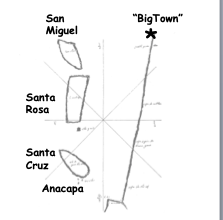
Campbell Grant
Then in 1602, the first map of the Santa Barbara Channel was drawn by Father Antonio de la Ascencion, diarist of the Viscaino Expedition. In the image shown, we have taken the liberty of translating the handwritten Spanish on the map into English. The “Big Town” was probably Mescalatitlan or Dos Pueblos.
Campbell Grant, in the opening chapter of his book, “The Rock Paintings of the Chumash”, waxes eloquent about the wealth of plants, trees, animal and sea life that were accessible to the Chumash. He says, “It is small wonder that the Chumash chose to live in such a land. It was a fine place to live.” A ramble through More Mesa convinces one that it still is a fine place to live.