|

August 2016

A Tiny Bright Light

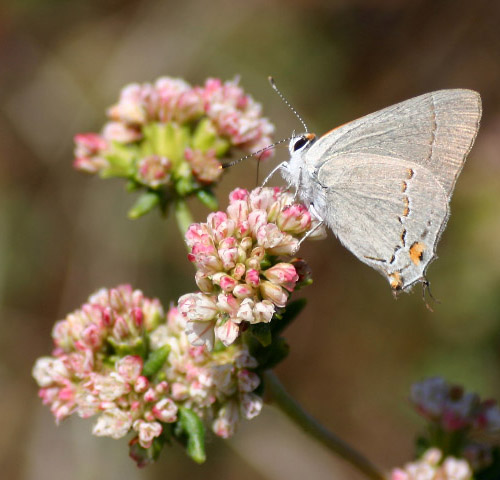
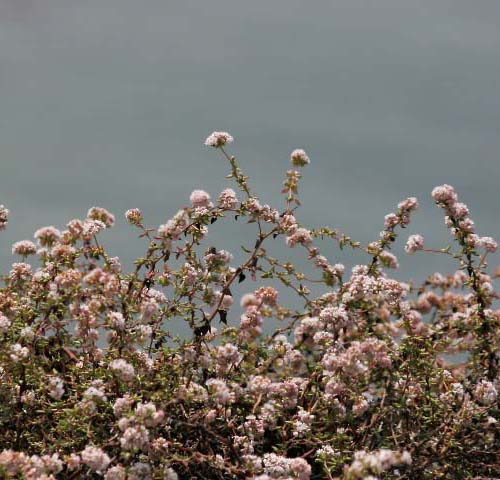
In a world dominated by talk of drought, we offer a tiny bright spot … about a lovely native plant; Seacliff Buckwheat. While almost all of our More Mesa native wildflowers bloom in spring, this cliff and dune dwelling plant flowers in the middle of summer, providing nectar to many butterflies and insects. We are happy to report that it has bloomed again this summer; the fifth year of our worst-ever drought and thereby proving that it is truly a “drought resistant” species.

303677529_aa4ba6e342_o

303677522_7c910767d6_o
And a Gentle Reminder …

While the drought is extremely distressing for human populations, it is a matter of life or death for wildlife. With little water and dwindling food supplies, animals are emboldened to enter urban spaces in search of food. Because this appears to be happening in our area, we urge you to protect and shelter your pets; especially at night. We also urge you to NEVER feed wild creatures; either directly, or by inadvertently leaving pet food where they can access it. Providing food to wildlife acclimates animals to humans and will eventually result in their demise.
Similar Posts

  • September 2016

    Time to Migrate The underlying reason for bird migration is survival: moving to areas with better food resources for the time of year. Birds move northward in spring, where they find abundant insects, flowering plants and in the less inhabited Northern Hemisphere, a higher number of nesting sites. However, as winter approaches and the availability…

  • January 2016

    Our beautiful More Mesa looks bleak indeed! We need rain more than we have needed in almost 15 years! And, although we received a little rain exactly a year ago, the long awaited 2016 El Niño pattern shift has finally happened, to deliver rain for this season. Recent predictions based on anomalous elevated equatorial sea surface…

  • |

    April 2011

    Water, water everywhere The word for this month is WATER!  Here in Santa Barbara, we are currently at 167% of our average rainfall for the “Water Year” 2011.  Indeed 9.62 inches of the 27 inches of rain has fallen in February and March.  What this means for More Mesa is that the vernal pool on…

  • February 2016

    Caves Are No More In several previous issues we discussed the dangerous erosion of the cliffs of the various sections of More Mesa. In October of 2014,  an incident where someone was hurt while in a cave on the western side of More Mesa precipitated a discussion of the geology of More Mesa’s cliffs. Specifically, we noted…

  • November 2016

    White-tailed Kites! Although sightings of White-tailed Kites have been rare in this fifth year of the drought, we are happy to report that a pair of these special birds have been seen, very recently, on the eastern side of More Mesa, and on the western portion as well. While these two sightings may be of…