|

April 2013

To Citizen Stewards
For more than a decade, our supporters have been active citizen scientists by reporting sightings of rare birds, animals and plants that are observed on More Mesa.  These reports have contributed significantly to our base of scientific knowledge about this last remaining jewel of coastal open space.  Many in our community have been unheralded stewards of More Mesa for these many years as well.

However, this month we would like to recognize recent activities of a group of recreational trail users, members of the Trails Council, who have noted, documented and reported some extremely distressing vandalism on the county-owned section of More Mesa (More Mesa Open Space). Because of their diligence and follow-up, all appropriate agencies and individuals are now involved and addressing this issue.

With this in mind, we encourage all of you who use More Mesa to help in active stewardship by reporting any inappropriate activities that you observe on More Mesa.  These include, unauthorized digging, tagging of trees and plants, defacing, cutting and removal of trees, shrubs and plants.  To report these activities, please e-mail Jeff Lindgren, Parks Operations Manager, South County Parks Operations, at jlindgren@sbparks.org.

Thanks for all your help!

*Most More Mesa visitors are responsible users. In addition to the normal, reponsible use of More Mesa trails, we are fortunate to have a local organization that promotes sustainable trail access: the Santa Barbara Trails Council. If you would like to learn more about sustainable trail use and maintenance, volunteer opportunities and stewardship for Santa Barbara area trails, become part of the trail community by visiting https://sbtrails.org/
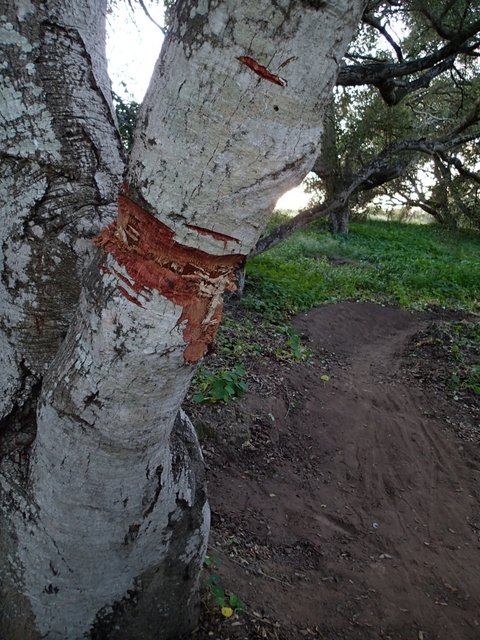
vandalism

Similar Posts

  • July 2015

    An irritating reminder … Yet another manifestation of the drought concerns poison oak; harbinger of itchy rashes. If you have been out on More Mesa you may have noticed that our abundant poison oak populations have come up in profusion this year, and in spite of little water. And you may also be aware that poison oak being…

  • January 2013

    As many of you may already know, More Mesa was sold to a Saudi investor in mid-December.  Obviously MMPC is disappointed that the seller offered the property to the community for $35 million, but subsequently sold to the new owner for $25 million.  However, we look forward to working with the new owner in a…

  • |

    April 2011

    Water, water everywhere The word for this month is WATER!  Here in Santa Barbara, we are currently at 167% of our average rainfall for the “Water Year” 2011.  Indeed 9.62 inches of the 27 inches of rain has fallen in February and March.  What this means for More Mesa is that the vernal pool on…

  • | | | |

    Mysteries!

    Spring came so late this year that it might as well have been a really long winter. But it is warm at last, and More Mesa has presented us with three different mysteries! Mystery #1: What was actually found in our vernal pool In our last issue we talked about the More Mesa Vernal Pool…

  • June 2013

    More Mesa in the Media  The “first ever” issue of our More Mesa Preservation Coalition e-update was published in mid May. All MMPC supporters who have supplied us with an e-mail address received this single, short page of information on what is happening on, and about, More Mesa. Our new feature sparked interest in many…

  • |

    March 2012

    Despite the lack of rain, signs of spring are beginning to appear on More Mesa. This Sunday, two butterfly species and two flowering plants were photographed. More Mesa Native Plants – March, 2012 Lacy Phacelia Chaparral Clematis Lacy Phacelia is a native annual, found in the southwestern United States and northern Mexico. The common name…