The Willow Family consists of over 400 different species of trees and shrubs of the Salix genus – a group of moisture-loving plants that are native to temperate and cold regions in the Northern Hemisphere. Depending on the species, willows range in size from towering giants of 90 feet or more, down to the Arctic Willow … a pinkish shrub that only reaches 6 inches in height and is the northernmost woody plant in the world!
Water, Water, Everywhere
The Arctic Willow aside, most willows thrive in temperate areas that provide sunlight and lots of water. That is why they are most often found near streams, lakes or ponds. Indeed, willows can absorb so much water that they are often planted to stabilize stream beds, or in flooded areas. Their leaves turn yellow in late fall and are shed in winter when the
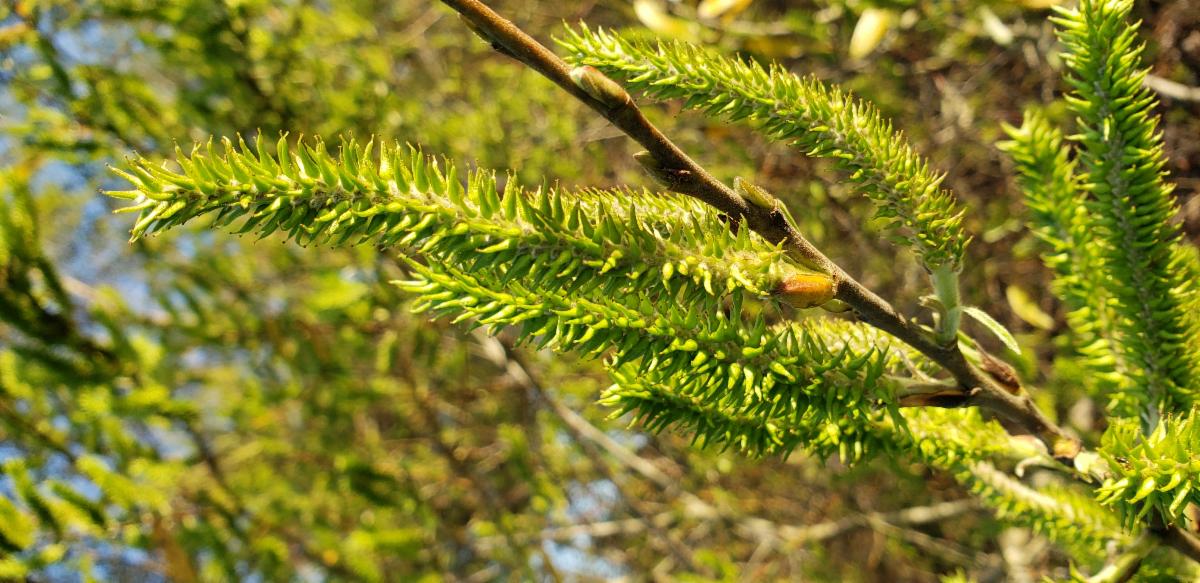
Female willow flowers. Photo by Chris Brems
tree is dormant. But willows are among the first plants to leaf in the spring. Several willow species are found on More Mesa and other open spaces in Santa Barbara. They can be easily identified in spring by their flowers, and very soon after by the fuzzy white cottony parts that are so familiar to lovers of willows. These fuzzy white structures are the carriers of willow seeds … as you can appreciate from the complex and fascinating story below!
What are they fuzzy white things anyway?
What are these fuzzy, white structures (called comas) and where do they come from? Start with the fact that willows have separate male and female plants and each produces flowers. Male flowers form into catkins … remember the Oaks from Treasure Hunt #1? These catkins, laden with pollen, are released and, hopefully, carried by wind to the female flowers on another plant. If that lucky happenstance occurs, pollinated female flowers will produce vast numbers of minute seeds surrounded by tufts of cottony hairs (the coma). As the season progresses to hotter and drier days, the seed and coma are dispersed randomly by the wind. This morning I walked the bike path beside Atascadero Creek and there were thick deposits of these dispersed comas everywhere.
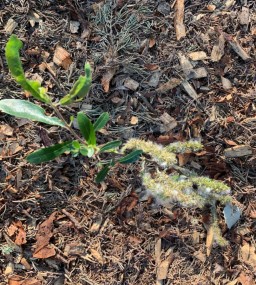
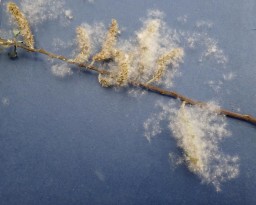
I inadvertently initiated the last few steps of the process above in my den. The left photo shows a small branch I harvested from a willow during an early morning walk. You can just barely see the cottony hairs peeking out. I left the branch on my desk and went off to do something else for a few hours. When I returned to my office there had been an explosion of cottony hairs. They were all over! Apparently, the higher temperature inside my home had encouraged all the seeds to emerge, and there were comas EVERYWHERE!
Branch Photo by Carol GeorgeExplosion!
Common Uses
The Chumash and other indigenous people used the various willow species in several ways:
As a traditional medicinal plant, infusions of the leaves, bark, or flowers were used for several disease remedies, especially for fever, pain and inflammation. The bark contains salicin, which is metabolized in the body to create salicylic acid, a precursor to aspirin.
The inner bark was used to make rope.
The large, long shoots of Arroyo Willow may have been favored for use in coiled and twined basketry.
Branches were used to make acorn storage baskets, for arrow shafts and tool handles.
And finally … in historical times, willow has been the wood of choice for cricket bats.
Symbolism etc.
The term “willow” has Celtic origins and its meaning is appropriately, “near the water”. Both from a natural and symbolic point of view, the willow is strongly linked to the element of water and the magic associated with it. In some parts of the world it is a symbol of immortality and the afterlife, in others a sign of grief. In more primitive and ancient settings, willows trees were associated with mysticism and superstition. In Britain, the willow was linked to the world of witches.
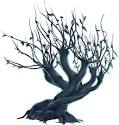
And … how could we forget the Whomping Willow of Harry Potter fame?
Then a Treasure, Now Trouble…BIG Trouble…The Invasives Some invasive plants move from their home territories via stealth. They hitchhike on boots, backpacks, clothing, packaging containers and ship bottoms. But, by in large, most were purposely transported from their homeland by humans who thought they were treasures that would be valuable in other, far-away places. For…
A Flower That Blooms for a Single Day … oops a Single Night! The plant we are featuring in this hunt, commonly known as Datura, and in the Nightshade family, is unusual in many ways. First it has several names, among them: Devil’s Trumpet, Devil’s Weed and Jimson Weed*. And, unlike the Miner’s Lettuce and Willow of…
Lizard … Bad Guy or Superhero? When I started this Treasure Hunt, I began by thinking about whether lizards, like snakes, conjure up negative images and feelings. After some research, I decided that the only reason I even thought about this issue was the expression “Lounge Lizard”; originally coined by the Flappers of the 1920s…
It’s Fall … Folks who don’t live in our beautiful Santa Barbara area often make a big issue of the fact that they love the changing seasons, and note that we don’t have them here. We all know we do, but the changes are subtle and you have look more closely to be aware of them….
WHOOOOO? IT’S OWLS – PART II We hope you enjoyed the first half of the owl story; the head. This Treasure Hunt discusses all the rest; what goes on below the owl’s head. Flying … Stealth is the Name of the Game Large, soft wings give most owls the ability to fly slowly and silently….
This Treasure is FAST: While internet searches may tell you that the Cheetah is the fastest animal on the planet, they are dead wrong. Today’s treasure can reach speeds faster than a moving Formula One race car. In fact, while in its spectacular dive, called a “stoop”, the Peregrine Falcon can reach speeds of up…