July 2015

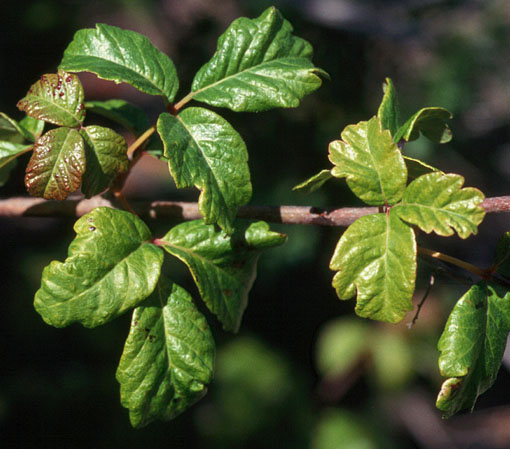
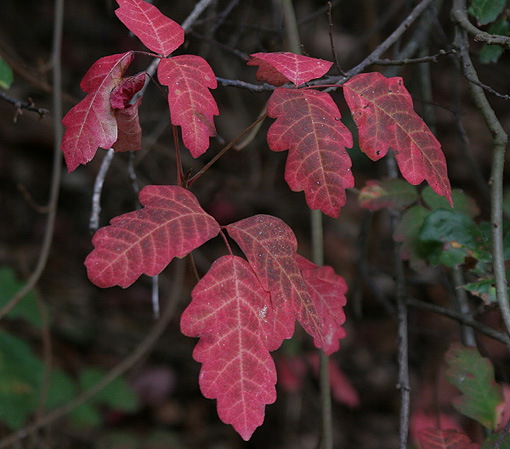
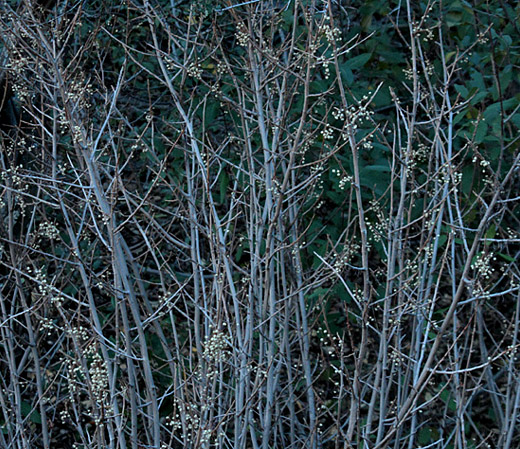
An irritating reminder … Yet another manifestation of the drought concerns poison oak; harbinger of itchy rashes. If you have been out on More Mesa you may have noticed that our abundant poison oak populations have come up in profusion this year, and in spite of little water. And you may also be aware that poison oak being deciduous, its leaves normally turn red and die in the fall. However in this fourth year of the drought, the leaves began to turn red in mid June and are already dropping. Because poison oak branches and stems are as dangerous as the leaves, but harder to notice without their famous “Leaves of three, let them be” reminder, all who visit More Mesa need to exercise special caution much earlier in the season … like now!

Poison oak can grow in several forms; in open sunlight as a dense shrub, or in shaded areas as a ground or climbing vine. The three leaflets have scalloped edges, resembling (slightly) the leaves of a true oak and can be bronze, bright green, yellow-green or reddish depending on the season. If you have inadvertently wandered into poison oak:

  • Remove your clothes as soon as possible
  • Wipe the suspect area with alcohol
  • Wash all exposed areas with cool running water. Use soap and water if possible … be sure to clean under fingernails
  • Wash clothing and all objects that came into contact with the plants
  • Bathe pets exposed to the plants.
2015Jul_03
Climbing Poison Oak in Spring
2015Jul_02
More Mesa Poison Oak in June
2015Jul_04
Poison Oak stems and fruit after the leaves have fallen
2015Jul_05
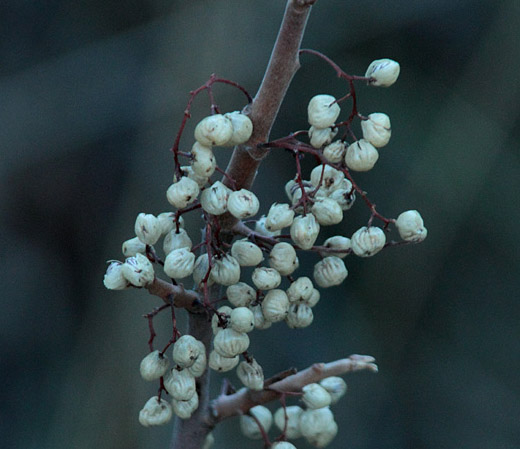
Poison Oak fruit

Similar Posts

  • January 2015

    And some rain came … Santa Barbara joyously welcomed the 6.3 inches of rain we received in December. Unhappily these rains represent only 20% of the yearly average rainfall in Santa Barbara and a very small percentage of the amount needed to end our three-year long drought. That being said, the growing things on More…

  • | |

    Living with the Lockdown – Treasure Hunt #6

    A Tiny, but Powerful Member of the Animal Kingdom Prologue: When I sat down to write this week’s Treasure Hunt I had planned to introduce one of my favorite and hard-working little plants, Deerweed. But as I got deeper into the research about certain aspects of Deerweed, I discovered a world of mind-boggling information on…

  • |

    August 2016

    A Tiny Bright Light In a world dominated by talk of drought, we offer a tiny bright spot … about a lovely native plant; Seacliff Buckwheat. While almost all of our More Mesa native wildflowers bloom in spring, this cliff and dune dwelling plant flowers in the middle of summer, providing nectar to many butterflies and insects….

  • March 2015

    The White-tailed Kite, MMPC’s signature bird, is a “California Bird Species of Special Concern”. It has been given this designation because the White-tailed Kite was once at risk of disappearing, and is currently found in few places in California; one important area being the Goleta Valley. And within the Goleta Valley, More Mesa is one…

  • September 2015

    Independent gets it wrong, but MMPC gets it right! While the announcement of potential development was no surprise to any of us at the More Mesa Preservation Coalition, a recent article in the Independent (30 July 2015) , in response to a More Mesa Press release (here and here),  got it wrong. We have been tracking the…

  • May 2015

    A Cautionary Tale In our Monthly News for October of last year we talked about the distinct difference between the cliffs of More Mesa on the east side and those of the west side.  In that issue we emphasized the danger involved in the steep, unstable and unpredictable west side cliffs of More Mesa, those…