October 2014

Of late, there has been a flurry of articles about the caves located in the cliffs on the west side of More Mesa.  These stories have been precipitated by a recent and unfortunate incident of a young man being severely injured by a falling rock in one of these caves.  While we cannot offer solutions to prevent this from ever occurring again, we can offer some fact-based scientific information about why it is extremely dangerous and unwise to traverse down to the beach or visit, and especially linger, in any of these caves.

Geology Facts:  The cliffs of More Mesa are distinctly different on the east and west sides.  The east side cliffs consist of Monterey Shale, a clay formation that is 6-18 million years old.  This section of the cliff erodes slowly and its 100 foot drop to the beach below is along a sloping grade.

However, the west side of the cliff face is of the Santa Barbara Formation, a younger sedimentary formation of marine sand that is only 700,000 years old. (The big blobby tar seeps oozing onto the More Mesa beach are from the Santa Barbara formation.)

This younger material erodes very quickly.  Indeed, sea cliff retreat in the Santa Barbara Formation has been demonstrated to be about 10 inches a year, the highest rate observed along this portion of the South Coast. What this all means is that the western cliff is steep, unstable and unpredictable.  Further …

• The western cliff should never be used to access the beach
• Visitors to More Mesa beach should never use areas close to the western cliffs
• The caves should never be occupied.

One further cautionary note … when it starts raining again, do not use the trail closest to the cliff face after a rain.  It may disappear as you are admiring the view.  Please be careful!


County of SB Website: Offshore Geology of Santa Barbara County

Similar Posts

  • December 2014

    2014 … AN EXCITING YEAR FOR MMPC! Updated Web Site As a fitting symbol of welcome to the new year, our updated and completely revamped MMPC website went “live” very early 01/01/2014. The power of its new WordPress format was wonderfully proven all throughout this past amazing year. New formats, layouts, search tools, clear links…

  • March 2014

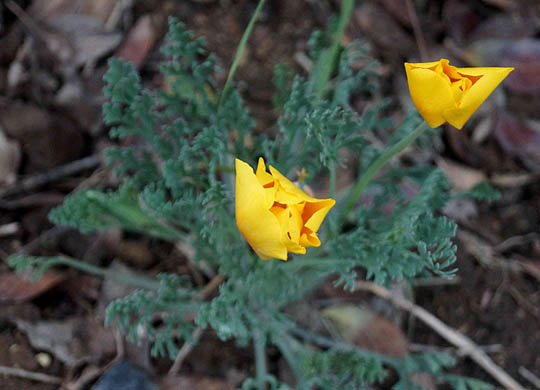
    Came The Rains … More Mesa on Sunday afternoon after three days of welcome rain. A lone native coastal poppy plant offers up two flowers. Fungi has enough moisture to make an appearance. Dogs make sport in a large pond at the coast.

  • August 2014

    Reptiles and Amphibians: In the past we have highlighted many of the biological resources found on More Mesa: birds, plants, mammals and, in last month’s update, our colorful insects, the butterflies. So it seems timely that the recent finding of a very long Gopher Snake shed should prompt this month’s discussion of the reptiles and…

  • |

    November 2014

    More Mesa Symposium Online Many supporters who were unable to attend the 2014 More Mesa Symposium have inquired about obtaining a video of the presentations. And many who did attend have been interested to review what they saw and heard. These are just two of the many reasons we are extremely pleased to announce that…

  • September 2014

    California is in a state of “Extreme Drought”, with 2014 being the driest year since 1895, 119 years ago! But, in spite of this disastrous condition, one can still observe some native wildflowers in bloom on More Mesa. For example, Deerweed, which normally blooms from March to October, has been in flower constantly for more than a year. Heavily…

  • February 2014

    Second Symposium It is eleven years since the first More Mesa Symposium was held at UCSB in 2003. Because a lot has happened since that time, MMPC is planning a second symposium, to be held on 15 March 2014. We are very excited to report that Wayne Ferren has agreed to take time from his…