May 2012
A New Treasure
This month, MMPC celebrates its twelfth anniversary. Often, in the course of those twelve years, we have made reference to the many “treasures” on More Mesa – birds, animals, plants, habitats, views etc. And now, just in time to celebrate our anniversary, we are delighted to report that yet another treasure has been found!
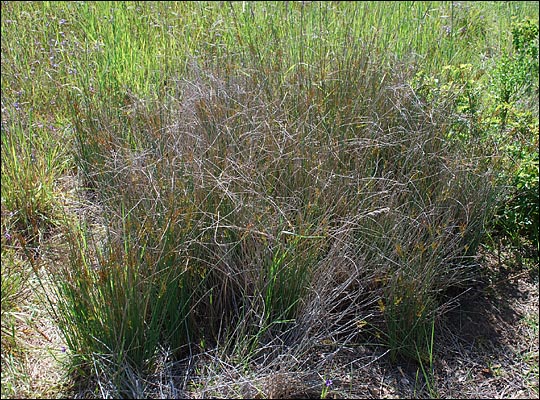
The discoverer is Richard Figueroa, a restoration ecologist with UCSB’s Cheadle Center for Biodiversity and Ecological Restoration (CCBER). Richard was out on More Mesa looking for seeds. Why seeds? Because More Mesa is a valuable seed bank for plants used in the restoration of coastal areas on, or around, the University. Therefore, Richard and his colleagues visit More Mesa on a regular basis. On one of these visits, Richard found Juncus balticus, or Baltic Rush, in the area of the historical eastern kite nesting territory (G4, H4 on our sighting map).
Baltic Rush or Wire Rush is native to California, and found elsewhere in North America and beyond. It is a perennial wetland plant that grows in wet depressions, swales, moist meadows, sloughs, and around springs. It is most often found in areas that are flooded in spring and dry in fall. Moreover, Baltic Rush fixes atmospheric nitrogen, which makes it important in the nutrient dynamics of wetland plant communities.
Although Baltic Rush is often widespread, there is only limited anecdotal evidence for its occurrence in our area. Specifically, this species has never appeared on any More Mesa plant list, including that of the recent Updated Biological Resources study (2008-2009). Furthermore, there are no specimens, nor on-line e-records, for this species from Carpinteria to Point Conception on the mainland. (There are specimens from the Channel Islands). All of the above make this a very exciting find!
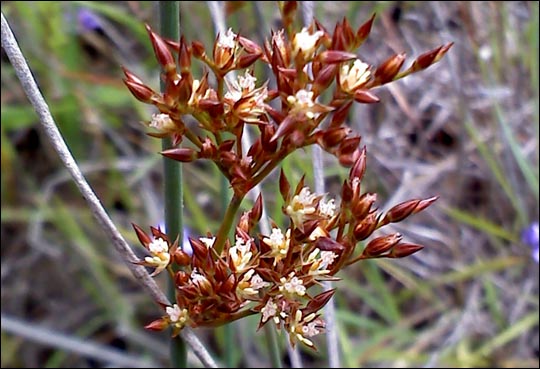
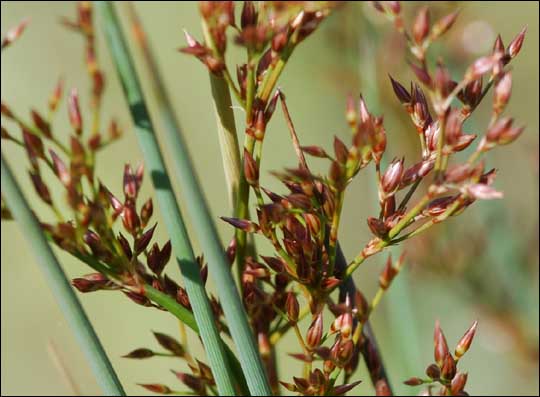
Currently, Richard is collaborating with Dieter Wilkin of the Santa Barbara Botanic Garden to gather the necessary specimens and data for inclusion of Juncus balticus in the herbarium at UCSB/CCBER. He has also provided a gallery of photos for our records, a few of which are shown below.
Thank you Richard … for your photos … and most especially for this new More Mesa treasure! .
| Baltic Rush, Juncus balticus, on More Mesa |
 |
 |
 |