March 2015

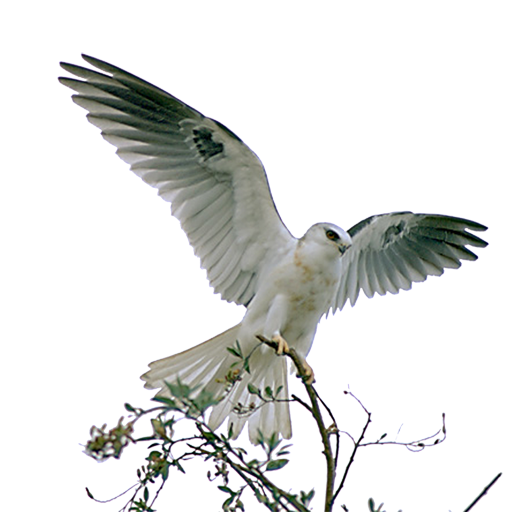
The White-tailed Kite, MMPC’s signature bird, is a “California Bird Species of Special Concern”. It has been given this designation because the White-tailed Kite was once at risk of disappearing, and is currently found in few places in California; one important area being the Goleta Valley. And within the Goleta Valley, More Mesa is one of the most prolific with regard to kite breeding and nesting. This is because it provides a bountiful habitat for many of these beautiful raptors.

Research has shown that a nesting pair of kites requires 150 acres of grassland to produce a clutch of healthy chicks. However More Mesa’s 265 acres routinely support more than a single pair. In fact in most “average” rain years, we have the largest number of nesting pairs in the entire Goleta Valley. Kite data gathered over more than 20 years shows that it is very common to have two nesting pairs, often three nesting pairs and in one incredible year, four nesting pairs!  When water is plentiful, the grasses grow, the rodent population has plenty of seeds and the kites then have ample prey to feed their young. In especially prolific years, we often have double clutching at one or more nests, and have even recorded up to 12 chicks in a given year!

Not even the lowest of these chick counts has been seen for the past three drought-years. For example, last year not a single chick was observed and only one lone pair of kites appeared to be living on More Mesa. However, there is some hope for this year. We have had a report of a pair of kites on the west side of More Mesa living on a nest site, guarding that site and also rearranging its nest material. We will keep you posted as the “courting season” progresses.

To learn more about kites, see:
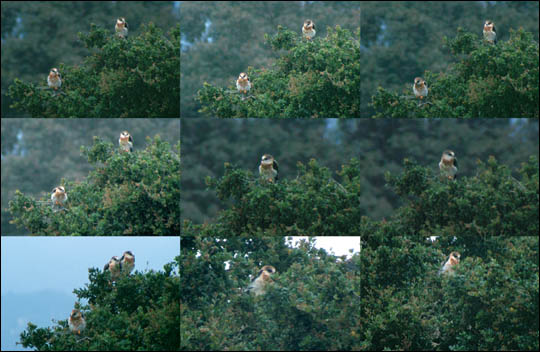
Four chicks at the central nest in 2003, when there were four nesting sites on More Mesa.

Similar Posts

  • June 2015

    Lots of Special Birds A wide area of More Mesa has been surveyed within the last few days. We are most happy to report that 34 different species were identified during this one survey. Among them were two raptors, a Peregrine Falcon and a Cooper’s Hawk. Also of very special interest were eight singing Grasshopper…

  • | | |

    December 2009

    As 2009 nears its close, MMPC celebrates, not only this happy season, but almost a decade of pursuing our vision … preserving all of More Mesa … forever. And, as has been our custom, we would like to share some highlights of what has been happening on More Mesa, and our work during the past…

  • |

    July 2012

    Change on our MMPC Web Site Note: As far as MMPC is aware, the sale of More Mesa to a Saudi developer in late 2012 seems to have marked an end to the attempts of the Hawk team to develop More Mesa.  Therefore all material related to this potential development has been removed from the MMPC…

  • | | |

    September 2011

    Stories of More Mesa Last month we shared one of our “Stories of More Mesa”; stories that tell the world what More Mesa means to the people who cherish it.  This month we present a second story, a different story, but the same theme. (If you, too, have a story you would like to share,…

  • May 2009

    White-tailed Kites We are delighted to report that the eastern kite nest has already fledged three chicks.  The appearance of the juveniles has been documented as early as the middle of April! This extremely early fledging of three chicks bodes very well for a large number of chicks being produced on More Mesa this year. …

  • February 2015

    Last month we reported on the beautiful greenery and grasses of More Mesa. This month we are pleased to present the next installment of emerging spring … flowers. A great many species are contributing to the show. And among all the introduced species (mustard, radish, Bermuda Buttercups, etc) there are some truly delightful natives popping…