|

April 2011

Water, water everywhere
The word for this month is WATER!  Here in Santa Barbara, we are currently at 167% of our average rainfall for the “Water Year” 2011.  Indeed 9.62 inches of the 27 inches of rain has fallen in February and March.  What this means for More Mesa is that the vernal pool on the southeast corner has almost reached both the coastal trail, and the north-south trail on the side of More Mesa abutting Hope Ranch.

In addition the emergent wetland that stretches from Hope Ranch toward the middle of More Mesa, has formed a fairly deep “pond” across the main north-south trail.  A wide, marshy expanse surrounds this pond.  In search of ways to circumvent the wetland, several looping paths have been cut by both walkers and emergency vehicles out on More Mesa for various reasons.   In general, the middle of the path, and surrounding areas, are very wet and muddy.

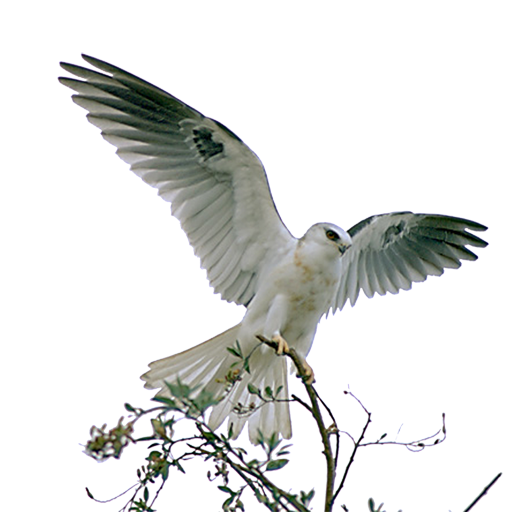
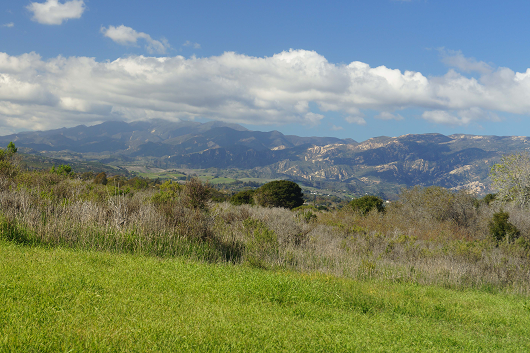
In spite of the water and the mud, a walk on More Mesa is incredibly rewarding this time of year.  Wildflowers are to be found in several places along the trails and the grasses are green and high.  And, there is evidence that kites are already nesting!
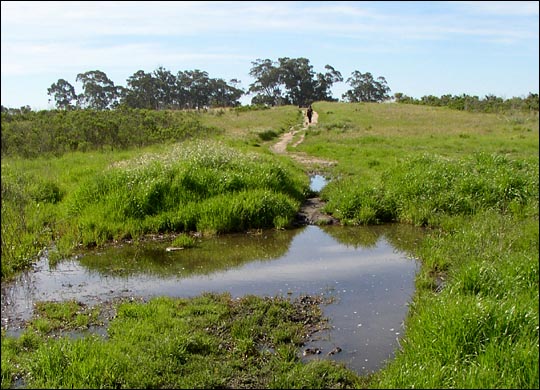
pond on trail
March 2011: A seasonal pool of water forms here in the rainy season.
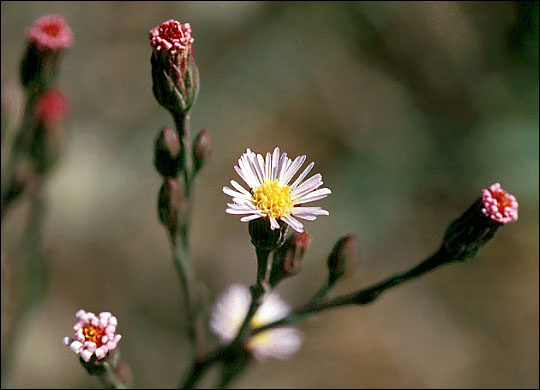
aster

Annual Water-aster, Symphyotrichum subulatum, photographed in the area shown in the photo above in October 2002. This native plant grows in coastal salt marsh, valley grassland and wetland-riparian. It can probably be assumed that the soils in this area remain moist for a period of time after winter rainfall, providing one of the habitats of choice for this aster.
Similar Posts

  • November 2011

    Plant List An online plant list for More Mesa has now been compiled and loaded onto the web site. The entries on the list are derived from the 1982 and 2010 Biological Resources Studies, a list from the Santa Barbara Botanic Gardens, and a few other observations. Please click here for the list. Native Plants Blooming…

  • | |

    Living With the Lockdown – Treasure Hunt #4

    A Flower That Blooms for a Single Day … oops a Single Night! The plant we are featuring in this hunt, commonly known as Datura, and in the Nightshade family, is unusual in many ways. First it has several names, among them: Devil’s Trumpet, Devil’s Weed and Jimson Weed*. And, unlike the Miner’s Lettuce and Willow of…

  • July 2016

    Why Collect Seeds Anyway? Last month we discussed the Coastal California Poppy and how the Cheadle Center for Biodiversity and Ecological Restoration (CCBER) collects seeds of this native plant on More Mesa. However, in addition to poppies, More Mesa is a very valuable source in the collection of many other important native plants. These include…

  • |

    April 2015

    On the bright side … Although the drought has increasingly occupied our awareness over the past three years, there are a few bright lights to mention on More Mesa this month. In a previous issue this year we talked about various wildflowers that have been seen … not in great abundance, but they are around,…

  • January 2011

    Welcome to a New Year! Draft of Updated Biological Resources Study: We have excellent news to report this month! In late December, we received notice that the long awaited Draft of the Updated More Mesa Biological Resource Study has been issued by Santa Barbara County, and is now available on their web site: http://www.sbcountyplanning.org/projects/07CNS-00116/index.cfm Please…

  • May 2011

    Vernal Pools With all the emphasis on water in last month’s news, it seemed most appropriate that our web site should include a section devoted entirely to a very special water feature of More Mesa; its vernal pool.  As described in the More Mesa Handbook, as well as in the Draft Updated Biological Resources Study,…