December 2011
As another fairly quiet year on More Mesa draws to a close, and as has been our custom, we offer highlights of 2011.
-
Updated Biological Resources Study
More than eighteen months after field work for the Updated Biological Resources Study was completed, a draft report was issued by Santa Barbara County. The 429 page report, prepared by Rincon Consultants, concludes More Mesa is just as environmentally sensitive as was reported in the original 1981 study by UCSB. Details of the report can be found here. In general, Rincon found the following:- An equivalent assemblage of plants and plant species
- More bird species.
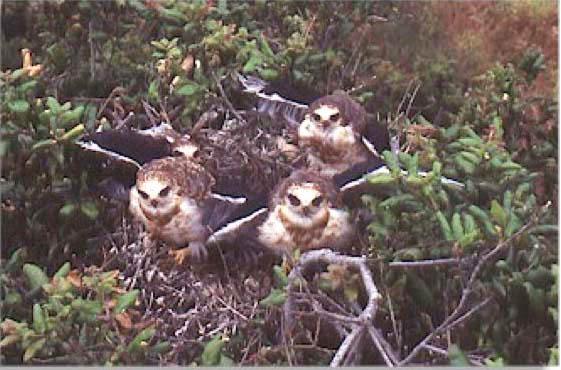
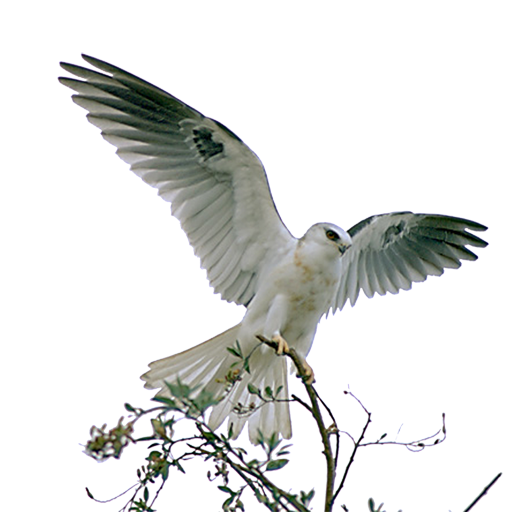
- Kite activity on More Mesa is just as important as ever, especially from a regional perspective.
- Kite prey are abundant.
- Wetlands persist in the same areas as previously reported, and are more extensive.
-
More Mesa For Sale
As we have reported for several years, More Mesa remains for sale, with the asking price still at $40 Million. As far as we know, it has not been sold. As always, we will keep you informed of any developments in this area.
-
Vernal Pool Feature
In May of this year we introduced a new “Vernal Pool” feature on our web site here. This feature includes general information on vernal pools (definition, life forms in pools etc.) and some specific details on vernal pools of California, Santa Barbara and More Mesa.
As always, thank you all for your wonderful support, and for loving this very special place.
Our warmest holiday wishes.
| More Mesa Native Plants – December | |
| Deerweed | Dune Primrose |
 |
 |
|
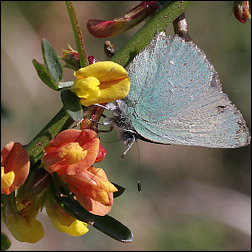
Deerweed is a small branching perennial shrub growing to a height of about three to four feet. It is drought tolerant, helps to reduce erosion, and is often one of the first pioneer species after a fire, before it is eventually replaced by other natives. It is found in coastal strand, coastal sage scrub and chaparral below 5000′, from Baja California to Humboldt County. As a member of the pea family, Deeerweed is able to fix nitrogen. The flowers are typical of the pea family, with yellow flowers that bloom starting from the first rains through August. The flowers are attractive to many butterflies such as Silvery Blue, Gray Hairstreak, Acmon Blue, Funereal Duskywing, Orange Sulfur, and Bramble Hairstreak (in photo). |
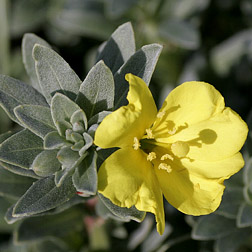
Dune or Beach Evening Primrose grows naturally on beach dunes, and thus requires well-drained sandy soils. It is low spreading, with a maximum height of about sixteen inches. It can take both full sun and partial shade, and is drought-tolerant. Flowering for several months from the first rains to August, it opens during the day, and thrives over a wide range of weather conditions (foggy to sunny). As the blooms die, they turn an attractive orange. The leaves are grayish-green. This plant grows in the southwest corner of More Mesa where marine sands have been-deposited by the wind creating a “coastal dune scrub habitat” that includes other plants typical of that habitat type. |