|

January 2009

Peregrine Falcon
In past Monthly News updates, we have encouraged bird enthusiasts who visit More Mesa to submit reports on what they see, via this web site. (Click on the button at the bottom of the home page or go to Contact > Sightings Report.)

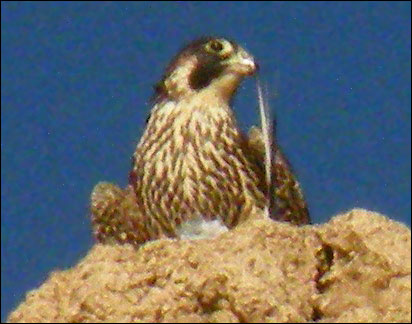
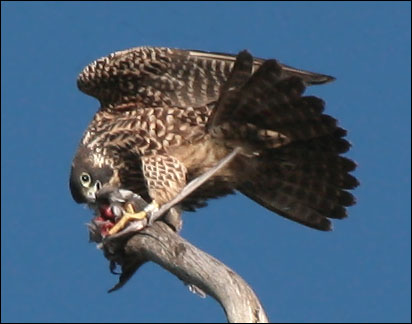
In the past few years, several of our supporters have used the web site to document regular bird sightings.  As a result, we are most happy to report that we recently received a marvelous sighting of a Peregrine Falcon near the coastal path of More Mesa … in the process of consuming a prey item!  This bird has been definitely identified as a juvenile Falco peregrinus anatum; a race that breeds in sub-arctic Alaska and Canada and throughout the western US.  This is very exciting news, since the last reported sighting of this species on More Mesa was in 2004.  We are indebted to Van Laurn, who is a frequent contributor to our sightings data base, for this report and the More Mesa photo below.  Initially there was also some concern about the nature of the prey item, until Van subsequently tracked down the carcass and positively identified the prey as a pigeon.

More Mesa Handbook
We will be launching the More Mesa Handbook at a morning get-together next month, and on this web site next month as well.  Watch for announcement of the time and place of the get-together; via e-mail and in the February News.

Thanks for caring about More Mesa, and a Happy New Year from all of us at the More Mesa Preservation Coalition!
mm
Juvenile Peregrine Falcon seen on More Mesa, January 7, 2009.
gs
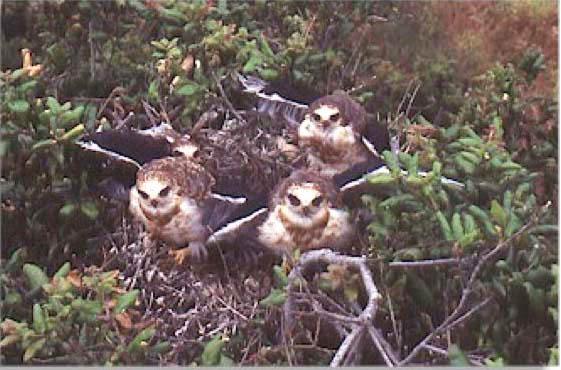
Possibly same Peregrine Falcon seen at nearby Goleta Slough mouth, Dec 26, 2008. 
Similar Posts

  • | | |

    December 2009

    As 2009 nears its close, MMPC celebrates, not only this happy season, but almost a decade of pursuing our vision … preserving all of More Mesa … forever. And, as has been our custom, we would like to share some highlights of what has been happening on More Mesa, and our work during the past…

  • May 2009

    White-tailed Kites We are delighted to report that the eastern kite nest has already fledged three chicks.  The appearance of the juveniles has been documented as early as the middle of April! This extremely early fledging of three chicks bodes very well for a large number of chicks being produced on More Mesa this year. …

  • March 2015

    The White-tailed Kite, MMPC’s signature bird, is a “California Bird Species of Special Concern”. It has been given this designation because the White-tailed Kite was once at risk of disappearing, and is currently found in few places in California; one important area being the Goleta Valley. And within the Goleta Valley, More Mesa is one…

  • | |

    It’s All About the Birds and the Bees!

    Mother Nature Has Incredible Ability to Bounce Back! In our Spring Issue we waxed eloquent over the rains that had filled our prolific and very significant vernal pool. And further, those same rains also created an unusually effective ecological chain of events. The rains brought grasses … grasses in great profusion. These grasses then provided an abundance…

  • July 2007

    Geology and Sensitive Species Why do some parts of More Mesa support few, and generally familiar, animals, while others are home to some of the more sensitive species in our region?  The answer lies partly in past geologic activity in the Santa Barbara region. Santa Barbara is underlain with many fault systems, the activity of…