September 2014

California is in a state of “Extreme Drought”, with 2014 being the driest year since 1895, 119 years ago! But, in spite of this disastrous condition, one can still observe some native wildflowers in bloom on More Mesa. For example, Deerweed, which normally blooms from March to October, has been in flower constantly for more than a year. Heavily populating the east-west coastal trail, it most likely prospers in this severe drought because it is a plant that is able to survive on the moisture left behind from the many fogs that visit us in spring and summer.
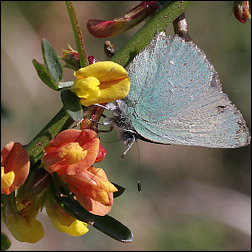
Deerweed, also known as California Broom, is not only resourceful, but has a fascinating adaptation. This dainty, native Chaparral plant has a clever way of attracting pollinators to the correct flowers. Beginning yellow, the flowers turn red after pollination.  Bees cannot see the color red, so it keeps them from wasting time on flowers that have already been visited.

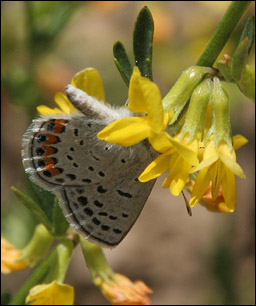
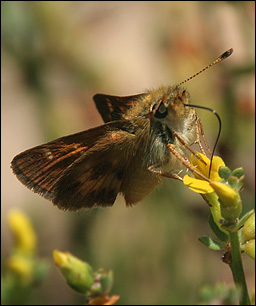
In addition to the non-native honeybee, Deerweed flowers are pollinated by native bees in the Bombus, Hoplitus, Osmia, Agapostemon, Anthophora, Habropoda, and Anthidium  genera. [1] Deerweed is pollinated by butterflies (nectar source), and also serves as a host plant to many species of butterfly larvae. Once the flowers have been pollinated, the resulting seeds provide food for birds and rodents. Lastly, per its name, deer feed on the plant, where they are found together.
  

Similar Posts

  • June 2007

    Many of you may remember the long and protracted campaign concerning the Hacienda Vieja Project.  From 2004 to 2006, the More Mesa Preservation Coalition fought through all the public processes to ensure that this development was appropriate for More Mesa.  We were deeply concerned about the size, bulk and scale of the proposed structures, as…

  • October 2014

    Of late, there has been a flurry of articles about the caves located in the cliffs on the west side of More Mesa.  These stories have been precipitated by a recent and unfortunate incident of a young man being severely injured by a falling rock in one of these caves.  While we cannot offer solutions…

  • March 2014

    Came The Rains … More Mesa on Sunday afternoon after three days of welcome rain. A lone native coastal poppy plant offers up two flowers. Fungi has enough moisture to make an appearance. Dogs make sport in a large pond at the coast.

  • February 2007

    More Mesa For Sale Many of you may have heard More Mesa is for sale.  This does not come as a surprise to us at the More Mesa Preservation Coalition (MMPC), since there have been persistent rumors to that effect for several months.  With the official listing of the property, it is now clear that…

  • May 2007

    Earlier this year, in the February News, the More Mesa Preservation Coalition reported that More Mesa was for sale … for $110 Million.  Shortly after this sale offering appeared in the “Multiple Listings”, the owner contracted with a local company to survey the property.  The “poles” and flags” that may be seen in various areas…