| | |

September 2011

Stories of More Mesa
Last month we shared one of our “Stories of More Mesa”; stories that tell the world what More Mesa means to the people who cherish it.  This month we present a second story, a different story, but the same theme. (If you, too, have a story you would like to share, please contact us here.)

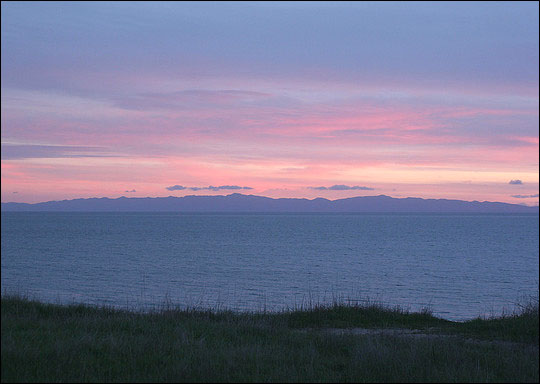
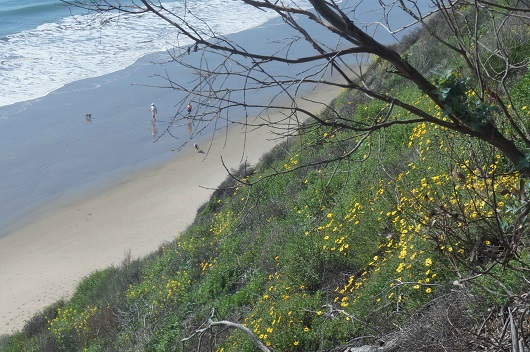
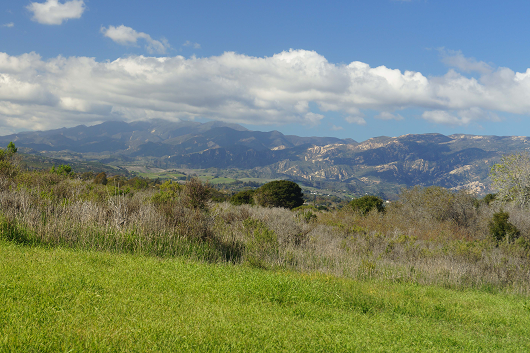
In my “other life” when I held a job, raised three kids and lived in the hustle and bustle of L.A., I hurried off to the mountains, the desert, or an peaceful seaside community every chance I could.  I drove one way for 5-20 hours, threw out a sleeping bag, slept, hiked, climbed, ran rivers and reveled in the wilderness … trees, free flowing rivers, wild flowers, wild animals and magnificent birds.  There were few structures, no traffic, few people and the whole outdoors to admire, appreciate and soak in. Now that I am twice as old as I was then, I still need the wilderness I sought in that other life.  But, my body is not as willing to jump into cars and drive 20 hours, sleep on the ground, climb, hike or run rivers.  But it’s more than happy to walk on More Mesa.  And although there are places where houses can be seen, there are also many places where you see only the mountains and the ocean.  And there are trees and wild flowers and wild animals.  There are magnificent oaks, incredible raptors, snakes, coyotes, foxes, raccoons, skunks and bobcats. I can feel the rhythm of the seasons, the wind, the sun, and experience the quiet.  In short, it feels just like a wilderness … a wilderness in my backyard.
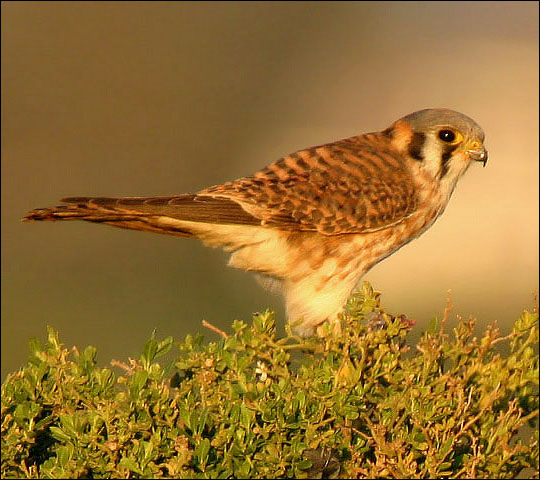
kestrel
sunset

Similar Posts

  • July 2016

    Why Collect Seeds Anyway? Last month we discussed the Coastal California Poppy and how the Cheadle Center for Biodiversity and Ecological Restoration (CCBER) collects seeds of this native plant on More Mesa. However, in addition to poppies, More Mesa is a very valuable source in the collection of many other important native plants. These include…

  • May 2009

    White-tailed Kites We are delighted to report that the eastern kite nest has already fledged three chicks.  The appearance of the juveniles has been documented as early as the middle of April! This extremely early fledging of three chicks bodes very well for a large number of chicks being produced on More Mesa this year. …

  • February 2015

    Last month we reported on the beautiful greenery and grasses of More Mesa. This month we are pleased to present the next installment of emerging spring … flowers. A great many species are contributing to the show. And among all the introduced species (mustard, radish, Bermuda Buttercups, etc) there are some truly delightful natives popping…

  • | |

    December 2012

    It was a busy and high profile year for More Mesa.  As is our custom, below are the highlights for the year 2012. Development Proposal for More Mesa Note: As far as MMPC is aware, the sale of More Mesa to a Saudi developer in late 2012 seems to have marked an end to the attempts…

  • |

    March 2012

    Despite the lack of rain, signs of spring are beginning to appear on More Mesa. This Sunday, two butterfly species and two flowering plants were photographed. More Mesa Native Plants – March, 2012 Lacy Phacelia Chaparral Clematis Lacy Phacelia is a native annual, found in the southwestern United States and northern Mexico. The common name…

  • | |

    February 2012

    The Eyes Have It! Why Is It That Raptors Have Such Great Vision? Many expressions are used to extol the incredible vision of raptors.  Most of us have used the phrase “Hawk-eyed”, or know someone we refer to as having an “Eagle Eye”.  And then, there is the oft-quoted football field analogy … “A Golden…